

Table of Contents
How Are AI and Digital Tools Transforming ABA Therapy in 2026?
Wondering how your ABA Therapy will keep up with the constantly evolving landscape of behavioral healthcare in 2026? The answer will be Artificial Intelligence (AI).
AI is no longer “on the horizon”, it is already changing how ABA therapy is delivered, documented, and personalized. From decoding complex behavioral data analytics to predicting therapy results, the AI-driven solutions are redefining the ABA Therapy.
Utilizing AI-powered Tools For RCM Automation
Across the U.S., ABA therapy providers are widely utilizing AI-powered tools/platforms to automate collection of data, improve billing accuracy, reduce administrative workload, and personalize their treatment plans.
What once took hours, such as manual documentation and analysis can now happen in a few minutes. This allows your clinicians to focus more on therapy and less on administrative work.
You may have already felt the friction: between the promise of digital tools & AI-driven solutions towards personalized ABA therapy and the complexities of actually integrating it into your clinical and operational workflows. You’re not alone!
We break down how AI and digital platforms help you personalize every layer of ABA therapy in 2026: clinical and operational.
Let’s discuss:
- How the AI tools or platforms are transforming how data is gathered, analyzed, and used for personalized ABA Therapy.
- What technologies are used to achieve smarter billing, scheduling, and clinical documentation.
- What emerging AI capabilities you need to look for personalizing ABA therapy in 2026 and beyond.
- How to balance AI automation with the human insight that makes ABA therapy meaningful.
Let’s see how adopting AI for ABA therapy helps your practice run smoother, scale smarter, and provide personalized care.
What Are the Battles in Traditional ABA Therapy?
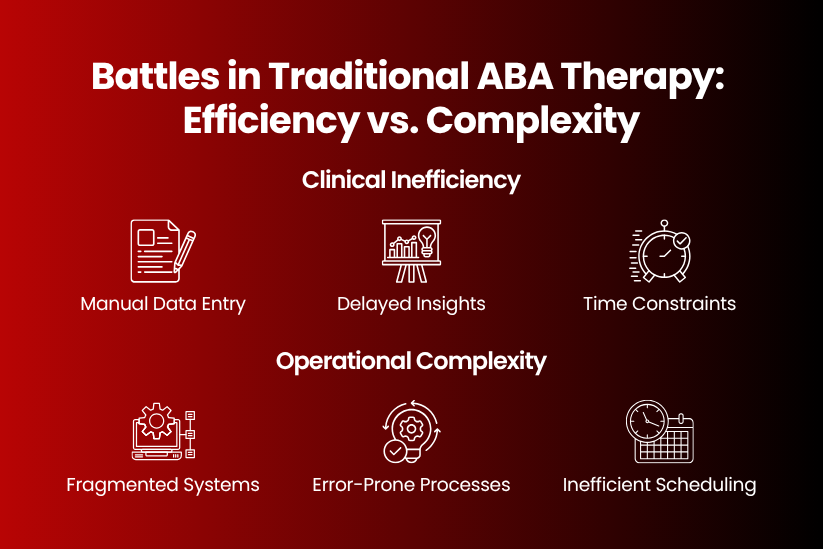
Though there is a significant growth over the years in the ABA services across the U.S., many ABA therapy providers still face these two persistent battles: clinical inefficiency and operational complexity.
Clinical Challenges
For decades, ABA therapists/clinicians relied heavily on manual data collection, often on paper or static spreadsheets. They would spend hours manually entering data, tracking responses, and generating graphs, leaving less time for patient care.
As a result, the analysts often receive delayed or partial insights which makes it hard to identify trends or adapt treatment plans without any delay.
Even now, many ABA clinicians spend nearly 25–35% of their time on documentation and data entry, which could be spent wisely for therapy and supervision.
Operational Challenges
On the revenue cycle management aspect, ABA practices multitasking with fragmented systems for appointment scheduling, payroll, medical billing, and reporting.
Manual processes are prone to errors in prior authorization or medical coding that will lead to denied claims. Manual scheduling will result in clinician underutilization or last-minute cancellations.
And the lack of real-time visibility often indicates that the leadership team is reacting to issues rather than predicting them.
That is why AI and digital tools are emerging as effective solutions to alleviate these clinical and operational pressures.
The Role Of AI in Modern ABA Therapy
Generally, AI’s role in healthcare has been very rapid and transformative. Especially, across hospitals, clinics and outpatient care providers, AI-driven systems revolutionize diagnostics, automate repetitive tasks such as documentation, and even predict health risks.
But when it comes to ABA practice, AI’s role is uniquely human-centric. The clinical judgment will not be replaced, but BCBAs and RBTs will be empowered to make smarter and data-informed decisions through AI-driven solutions.
In 2026, AI and digital tools in healthcare acts as a bridge between clinical precision and operational efficiency for ABA practice management:
- The clinicians will get better insights into patient behavior trends.
- The clinic administrators will gain real-time control over scheduling, billing, and compliance.
- Practice owners can see how their therapy outcomes and revenue connect.
For ABA therapy providers, this is going to be a new era of personalization where every decision, either clinical or operational, will be backed by data-driven intelligence.
Why Personalization Matters for Your ABA Practice
Personalization using AI in ABA therapy has always referred to tailoring therapy to each learner’s needs. But in 2026, it’s expanding to mean something broader, personalizing the experience for your entire ecosystem: clients, families, clinicians, and administrative teams.
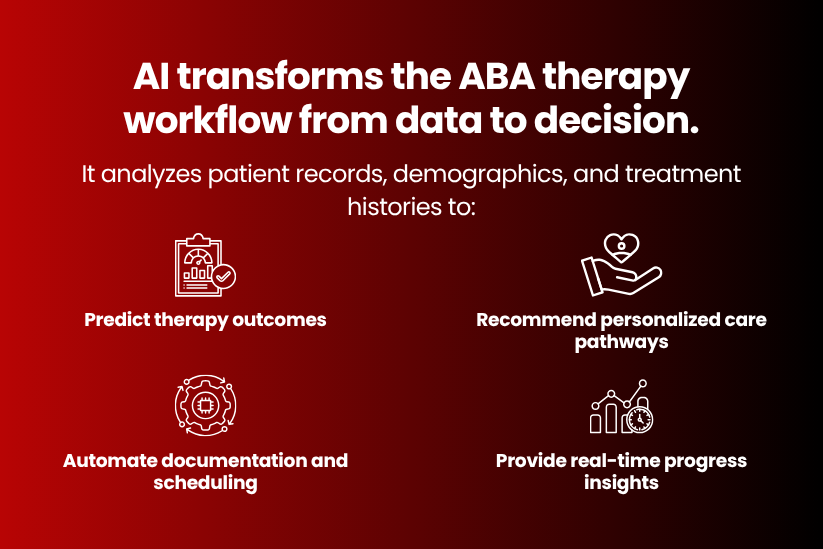
AI will help analyze patient records (when available), personal demographic information, and vast amounts of treatment history to predict outcomes and recommend care pathways that will lead to better clinical outcomes.
-Loren Larsen, CEO and co-founder of Videra Health
When your systems understand your workflows, and your data can predict what’s next, your practice moves from reactive to proactive.
- Personalization using AI in ABA therapy ensures:
- Each learner’s therapy plan evolves dynamically based on data.
- Clinicians receive automated insights instead of raw metrics.
Admin teams see real-time payer trends and cash flow forecasts.
Ultimately, personalization enhances both clinical outcomes and practice stability. A child progresses faster, a therapist avoids burnout, and your billing cycle shortens, all powered by intelligent systems working in sync.
How Clinical and Operational Personalization Overlap
It’s a mistake to think of clinical and operational systems as separate. In ABA, these worlds are deeply connected. A child’s progress data influences treatment frequency, which affects scheduling, authorizations, and billing volume. AI tools can connect those dots in real time.
For example:
If a learner’s progress begins to plateau, the system alerts the BCBA to adjust the plan.
That change automatically triggers an updated authorization workflow. The billing system updates projected revenue and staffing needs accordingly.
This seamless integration means your clinical decisions instantly inform your business operations, a level of personalization impossible with manual systems.
Key AI Technologies & Digital Tools That Transform ABA Therapy
Let’s explore how specific AI and digital tools are transforming both clinical and operational aspects of ABA, and what to look for in 2026.
Clinical Personalization Tools
Behavior-Tracking & Data-Collection Platforms
Modern platforms like Motivity and CentralReach have revolutionized behavior tracking. Instead of static data entry, these systems record real-time behavioral responses, prompt therapists for next steps, and automatically generate visual progress graphs.
AI then analyzes the data to surface insights such as:
- Patterns in maladaptive behavior frequency.
- Optimal reinforcement schedules.
- Predictive suggestions for goal adjustments.
This means clinicians can focus more on therapy and less on data wrangling, while supervisors get immediate visibility into learner progress across locations.
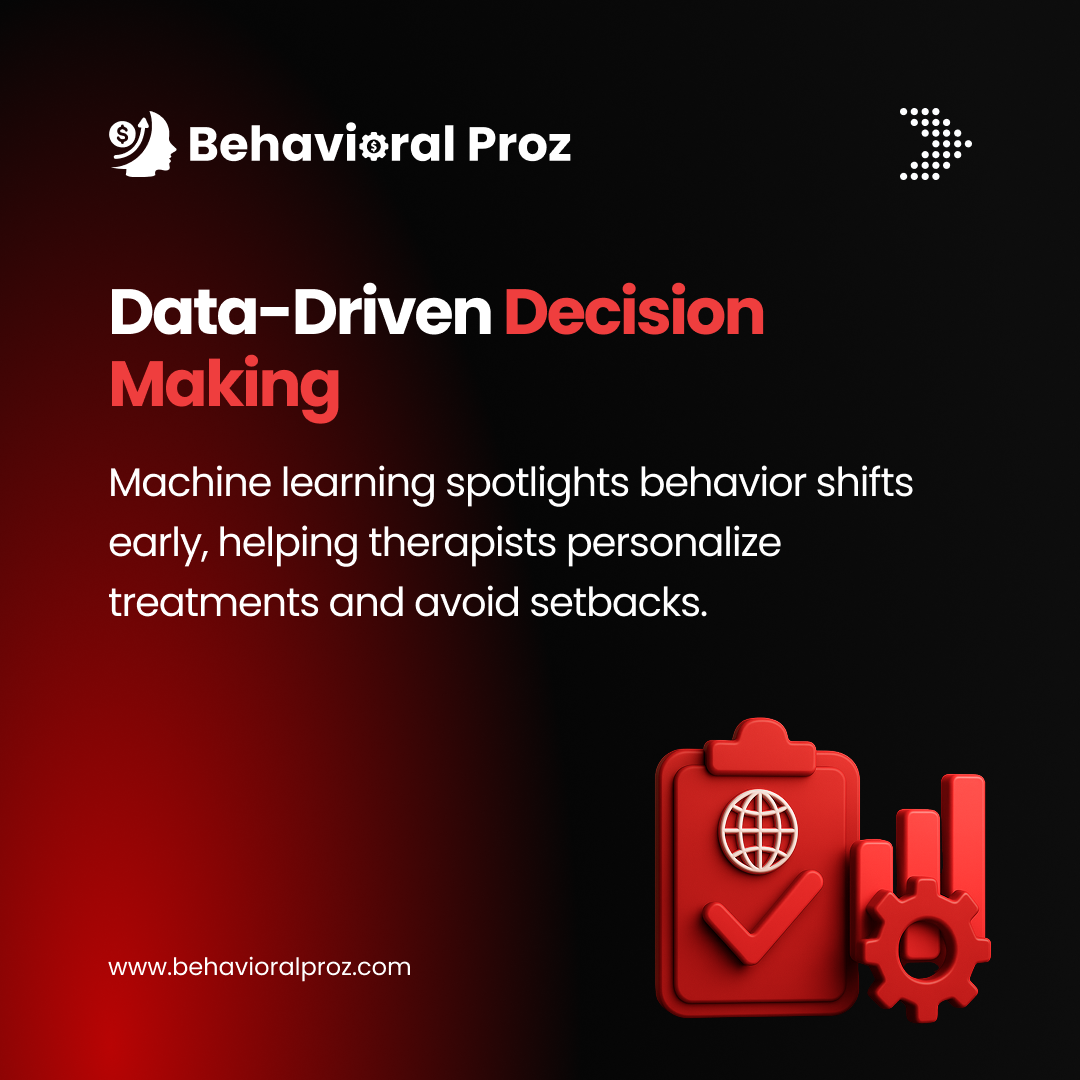
Machine Learning & Predictive Analytics for Behavior Patterns
Machine learning models are now capable of detecting subtle behavior trends invisible to the human eye.
By analyzing session logs, they can predict when a skill might plateau or when a child may regress, allowing BCBAs to intervene early.
Predictive behavioral data analytics also support:
- Adjusting session intensity dynamically.
- Matching learners with the most effective therapist.
- Identifying which teaching methods yield the best outcomes.
These insights don’t replace the clinician’s expertise; they amplify it, turning massive datasets into actionable intelligence.
A 2022 exploratory study “Machine learning-based ABA treatment recommendation and personalization for autism spectrum disorder”, found that machine learning algorithms were able to predict ABA treatment recommendations with an accuracy of ~81-84% compared to clinician-prepared recommendations.
Real-Time Treatment Insights
AI dashboards now consolidate all active cases, progress scores, and clinician notes into a unified, real-time view.
Supervisors can see which programs are on track, which need review, and which therapists may require coaching.
This immediacy improves quality oversight, ensures treatment fidelity, and strengthens data-driven supervision, an area where many ABA practices still struggle.
Easier Clinical Documentation
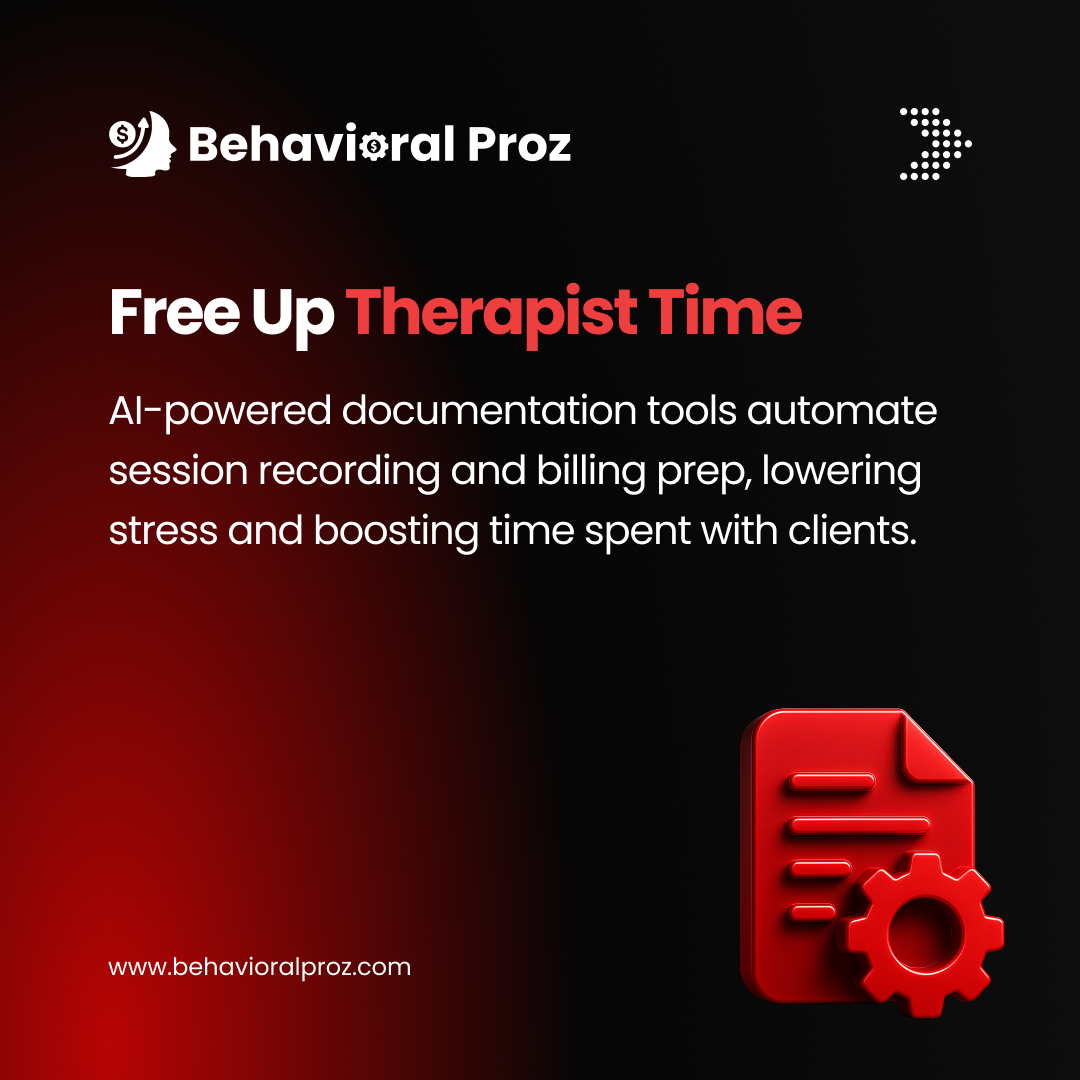
If there’s one area where AI delivers immediate value, it’s documentation. AI-powered tools can now summarize session notes, transcribe clinician dictations, and auto-populate data fields based on observed behaviors.
These tools cut down documentation time by as much as 40–60%, giving therapists back valuable hours each week.
And because the data is structured and searchable, it directly supports accurate billing and compliance audits.
Operational Personalization Tools
ABA Practice Management Platforms
Comprehensive platforms integrate scheduling, HR, payroll, and billing into a single system. AI personalization adds another layer, predicting staffing gaps, forecasting cancellations, and optimizing clinician utilization.
For practice owners, this means a single source of truth for operational decisions, with insights like:
- Which therapists are underbooked.
- How many sessions risk cancellation.
- Which payers are delaying reimbursements.
AI-Automated Revenue Cycle Management (RCM)
AI-driven RCM systems bring intelligence to every step of your revenue cycle, from charge capture to denial recovery.
They detect missing CPT modifiers, identify claim risks before submission, and learn payer patterns over time.
Practices using AI-based RCM tools have seen:
- 30–40% fewer denials.
- Faster claim turnaround.
- Improved net collection rates.
In a field where margins can be tight, those gains directly fuel reinvestment in clinical quality.
Smarter Scheduling & Fewer No-Shows
AI scheduling algorithms consider therapist credentials, travel distance, and learner availability, building optimized calendars in seconds.
More importantly, predictive models flag clients at risk of cancellation and trigger proactive reminders.
Some ABA platforms report 25–30% fewer no-shows after implementing AI-assisted scheduling, directly increasing revenue consistency.
Streamlined Billing & Faster Insurance Claims
AI billing engines verify claims against payer rules, cross-check documentation, and validate codes automatically.
This not only accelerates processing but also improves accuracy, ensuring claims meet every compliance requirement before submission.
The result: fewer rejected claims and significantly shorter A/R cycles.
How AI Modernizes ABA Medical Billing and Coding
AI billing systems now interpret clinical documentation and recommend CPT codes with near-human accuracy.
This reduces dependency on manual coders, minimizes human error, and ensures compliance with payer policies and Medicaid rules, especially valuable given the ongoing changes expected in 2026.
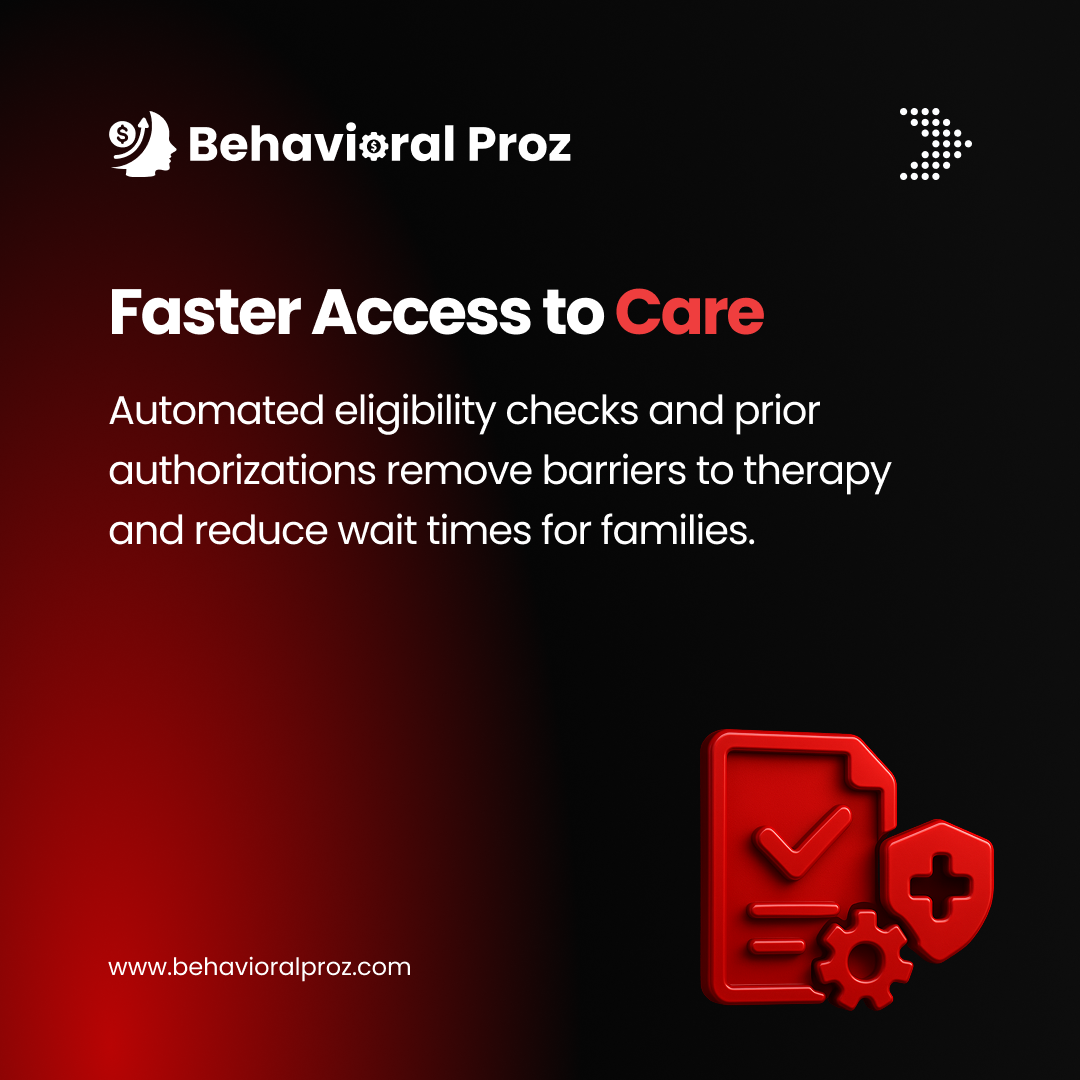
Automated Prior Authorization & Eligibility Verification
AI bots can complete insurance eligibility verification and automate prior authorizations in seconds, integrating directly with payer portals.
For ABA practices where prior auth is a bottleneck, this automation eliminates hours of manual work per week and prevents costly service delays.
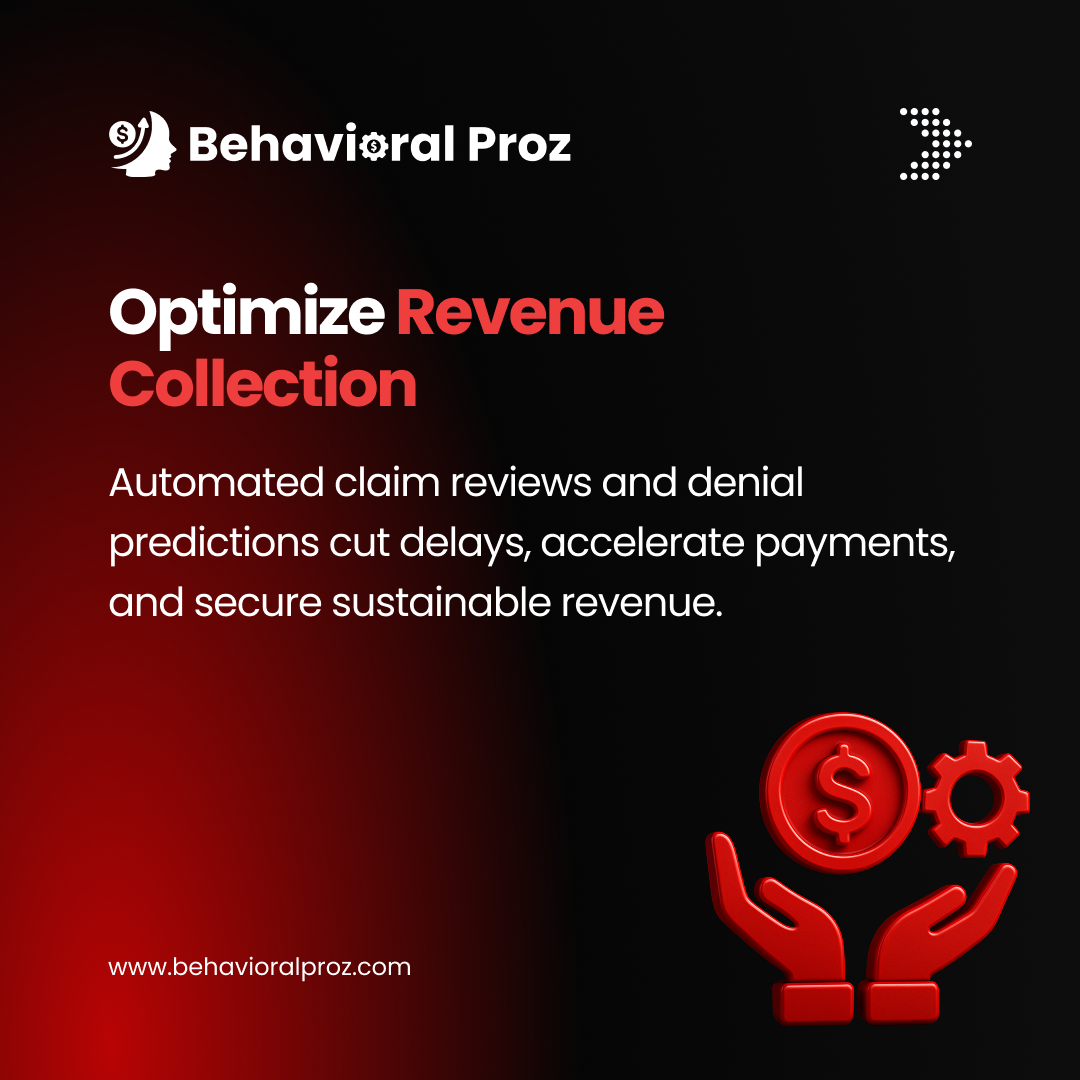
Predictive Denial Management & Revenue Recovery
Instead of reacting to denials, AI now predicts them.
Machine learning models assess historical payer behavior and documentation patterns to forecast which claims may be at risk.
The system then recommends corrections, before the claim even goes out.
This proactive approach can reduce claim denials by up to 50% and improve cash flow predictability.
Smarter Staff Planning
AI workforce analytics use data from schedules, cancellations, and productivity reports to optimize staffing.
They can recommend ideal caseload distribution, forecast burnout risk, and guide hiring decisions.
This helps maintain balance, ensuring your clinicians stay supported and your operations stay efficient.
At Behavioral Proz, we help ABA practices stay ahead of the curve by integrating AI-driven revenue cycle management solutions (RCM) into your ABA practice management.
From automated prior authorization to predictive billing and outcome tracking, we help you every step of the RCM process and analytics for ABA Therapy. More importantly, we help ABA practices like yours implement the AI tools without overwhelming your team or compromising the quality of care your clients receive.

What to Look for in Digital Technologies for ABA Care in 2026: Features & Criteria
When you evaluate or plan for adopting these tools in 2026, here’s what your practice should prioritize:
Interoperability & Data Integration
Your tools must integrate with your EMR/ABA-data system, scheduling, billing system, and ideally your payer/eligibility platforms.
Look for APIs, open architecture, and the ability to export/import data easily.
Without integration, you’ll end up with silos, undermining the personalization benefits.
You need to check:
- Can the tool integrate seamlessly with your EMR, scheduling, billing, and payer platforms?
- Does it support APIs, open architecture, and easy data import/export?
Will it prevent data silos that disrupt your workflows and personalization efforts?
Real-Time Insights & Workflow Automation
- Does it offer real-time alerts for clinician utilization, eligibility lapses, or claim issues?
- Can it automate workflow actions, like suggesting interventions when plateaus are detected or alerting staff when eligibility expires?
- Will it reduce manual tasks and improve staff efficiency?
- When a behavior plateau is identified, can the system automatically suggest intervention changes?
- When eligibility expires, can the system alert billing/staff rather than relying on manual checklists?
Customization for ABA-Specific Workflows
- Is the platform designed specifically for ABA therapy, not just generic behavioral health?
- Does it support ABA workflows like prompt fading, mastery criteria, token systems, and caregiver participation?
- Can it align progress tracking, billing codes, and documentation with ABA-specific payer requirements?
Analytics that Support Both Clinical and Financial Outcomes
- Can it connect clinical progress (skill mastery, behavior reduction) with financial outcomes (billable hours, denials, revenue)?
- Will it help answer questions like, “Which interventions increased session attendance or revenue this month?”
- Does it provide both macro and micro insights for data-driven ABA decision-making?
Proven Evidence, Usability, and Adoption Support
- Has the tool demonstrated real-world results or peer-reviewed evidence of success?
- Is the interface intuitive enough for clinicians to use consistently?
- Does the vendor offer training, onboarding, and responsive support to ensure smooth adoption?
Compliance, Security & Ethical Safeguards
- Is the solution fully HIPAA compliant and backed by a Business Associate Agreement (BAA)?
- Are data encryption, secure cloud storage, and audit trails built in?
- Does the vendor address ethical issues like AI bias or over-reliance on automation?
Scalability & Flexibility for Future Growth
- Can the system grow with your practice—adding new users, sites, or features easily?
- Does it support future integrations like telehealth, wearables, or VR?
- Is the platform flexible enough to evolve as your practice expands?
ROI and Operational Impact
- Can the vendor demonstrate measurable ROI, like reduced denials or faster reimbursements?
- Will it improve clean claim rates, days in AR, or clinician utilization?
- Are there case studies or benchmarks from other ABA providers showing tangible results?
Real-world Case Study: AI For Personalized ABA Therapy
Case Study: Machine learning‑based ABA treatment recommendation and personalization for autism spectrum disorder: An exploratory study
Study Overview
- The study enrolled 29 children (aged 2-6 years) diagnosed with Autism Spectrum Disorder (ASD) in a 6-month intervention.
- Aimed to explore how machine learning (ML) algorithms could recommend and personalize ABA treatment goals.
- Two ML methods used:
- Patient similarity (comparing a new child to similar past cases)
- Collaborative filtering (CF) (recommending target skills based on patterns across learners)
- Primary metrics included:
- Commonality (how aligned the ML-recommended domains and target codes were with clinician‐prepared plans)
- Effectiveness (percentage of recommended targets mastered by the participants)
Key Findings
- The ML models achieved average commonality scores of ~82.9% for domain codes, ~84.1% for target codes across participants.
- For target recommendations: Precision ~0.85-0.90, Recall ~0.96, Accuracy ~0.83-0.87.
- Effectiveness (percentage of ML‐recommended targets mastered) was strong: many participants achieved 80-100% mastery of recommended targets in months 1-3 and months 4-6.
- Authors conclude that ML has potential to support therapist decision-making and personalize ABA treatment plans more rapidly and consistently.
Study Overview
- Setting: A rheumatology clinic in Dubai/United Arab Emirates, involving 50 patients who required prior authorization (PA) for investigations or biological treatments.
- Objective: To compare the efficiency and accuracy of a proprietary AI rule engine (supported by an ML model) against the traditional insurer/authorization process.
- Methodology:
- Anonymised medical reports were fed into the AI rule engine.
- At the same time, identical requests were sent via the standard submission to insurance companies.
- The engine classified appropriateness of diagnosis and treatments, and results were compared to insurer decisions.
Key Findings
- For investigation approvals (41 cases):
- AI engines found ~95% of requests “appropriate” within a minute.
- Insurance companies approved 82.9% of requests; 17.1% remained pending; 2.4% were rejected.
- 29.2% of investigations required further queries (i.e., additional back-and-forth).
- For medication authorisations (43 cases):
- The AI engine matched every diagnosis and treatment plan.
- Insurance companies approved 81.3%; 18.6% were pending. Average delay for those further queries: ~5 days.
- Conclusion: The AI tool significantly reduced time to classification and indicated potential for reducing service delays due to authorisation bottlenecks.
Why These Matter
- Both studies show clinical personalization using AI: goal-setting, intervention recommendations, immersive therapy experiences.
- They also offer operational implications: faster planning, improved engagement (less drop-off), more measurable outcomes, all of which support strong documentation, better measures for payers, and potential revenue stability.
- For your practice, these examples demonstrate that digital/AI tools are not just theoretical, they are being implemented and showing measurable benefit.
The Future of ABA is Personalized, Data-Driven, and AI-Enhanced
As AI continues to mature, its greatest contribution to ABA therapy isn’t automation, it’s amplification.
It empowers clinicians to do what they do best: deliver transformative care.
It empowers administrators to make better business decisions faster.
And it empowers owners to scale without losing the personal touch that defines ABA.
By 2026, AI won’t just be an optional add-on for ABA practices, it will be the infrastructure that connects every part of your clinical and operational ecosystem.
The next phase of growth for your ABA practice isn’t about adopting more tools, it’s about adopting smarter, personalized systems that learn, adapt, and evolve with you.