

Table of Contents
The waiting room has gotten longer. The documentation pile hasn’t gotten shorter. And somewhere between the third utilization review appeal and the sixth credentialing delay this month, the behavioral health executive sitting at the center of it all starts calculating how many hours are spent managing the system rather than improving it.
This is the environment AI walked into, not a tech sandbox, but an industry under sustained operational pressure. Chronic staffing shortages. Documentation overload. Reimbursement volatility. Fragmented systems that were never designed to communicate with each other. Behavioral healthcare was already stretched before anyone started talking about large language models.
What’s quietly happening now is less a transformation than a recalibration. Across the country, behavioral health leaders are integrating AI not as a clinical replacement but as an operational intelligence layer, using it to eliminate the administrative friction that has quietly consumed some of the field’s most valuable resource: the time, attention, and energy of the people running it.
To understand how this is actually playing out in practice, we have collected 7 behavioral health executives insights across treatment, technology, and care delivery, leaders navigating the real complexity of running organizations where AI has to earn its place alongside the humans doing irreplaceable work.
What 7 Behavioral Health Leaders Are Actually Saying?
Rob Marsh - Chief Executive Officer, Bradford Health Services

For Rob Marsh, leading one of the country’s most established substance use disorder treatment networks means operating inside one of the most administratively complex environments in behavioral healthcare. Bradford manages multiple sites, a demanding payer landscape, and the full weight of utilization management that comes with residential and inpatient SUD treatment at scale.
Marsh’s perspective on AI is grounded in that operational reality. The administrative overhead at Bradford isn’t an inefficiency that better management can solve; it’s structural. Prior authorizations, concurrent reviews, credentialing workflows, and denial management aren’t optional processes. They’re the cost of operating in a managed care environment. What AI offers, in Marsh’s view, is the ability to handle that structural burden with fewer human hours, freeing leadership capacity for the decisions that genuinely require experienced judgment. For a CEO managing a multi-site treatment organization, that’s not a technology conversation. It’s a capacity conversation.
Alon Joffe - Co-Founder and CEO, Eleos Health
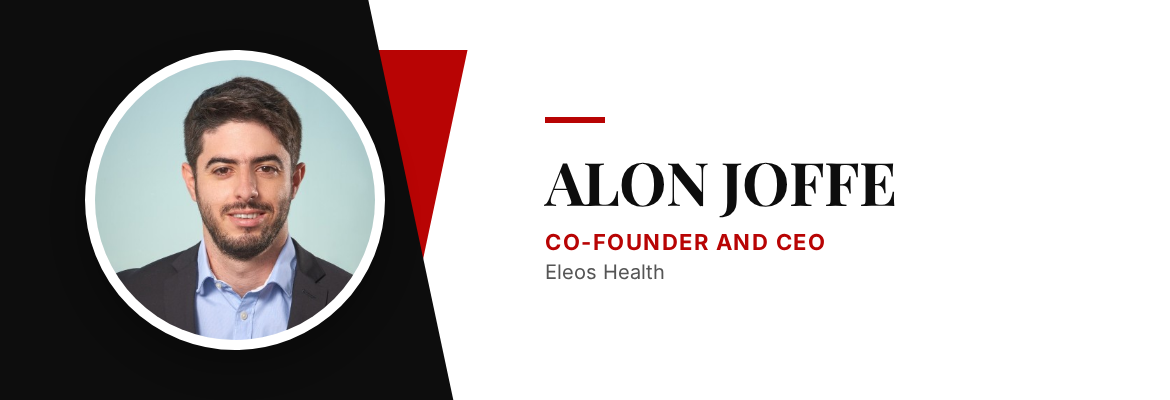
Alon Joffe built Eleos Health around a thesis that clinical documentation in behavioral health isn’t just a productivity problem; it’s a burnout accelerant. The math had become unsustainable: clinicians spending an hour on notes after seeing patients for eight hours, night after night, until the job became something different from what they trained to do.
Joffe’s answer was an AI platform that synthesizes session content into structured clinical documentation, shifting the clinician’s role from transcription to verification. The distinction is more than semantic. Verification requires clinical judgment. Transcription requires time. One of those is in short supply in behavioral health, and it isn’t judgment. Joffe has been consistent that Eleos was never designed to reduce the clinician’s presence in the room. It was designed to reduce what waits for them after they leave it.
Dr. Monika Roots - Co-Founder and CEO, Bend Health

Dr. Monika Roots operates at the intersection of tech-enabled pediatric behavioral health and family-centered care, a context where operational efficiency and clinical intimacy aren’t competing values, but they do require deliberate architecture to coexist.
Dr. Roots sees AI most clearly as a tool that operates within the care system, not care itself. For Bend Health, that means using AI to accelerate research synthesis, sharpen payer strategy conversations, and compress the time it takes to move from data to decision. The pediatric behavioral health space carries its own reimbursement complexity, navigating commercial payers, MBHO carve-outs, and authorization requirements for a population with significant unmet need. AI that helps leadership teams move faster through that complexity creates real organizational capacity, without touching the therapeutic relationships that are the core of what Bend delivers.
Simplifying Behavioral Health Operations.
From revenue cycle management and denial prevention to credentialing and multi-state billing, we handle the administrative infrastructure, so your clinical and executive teams can focus on what they do best.
Dr. Lauren Grawert - Chief Medical Officer, Aware Recovery Care
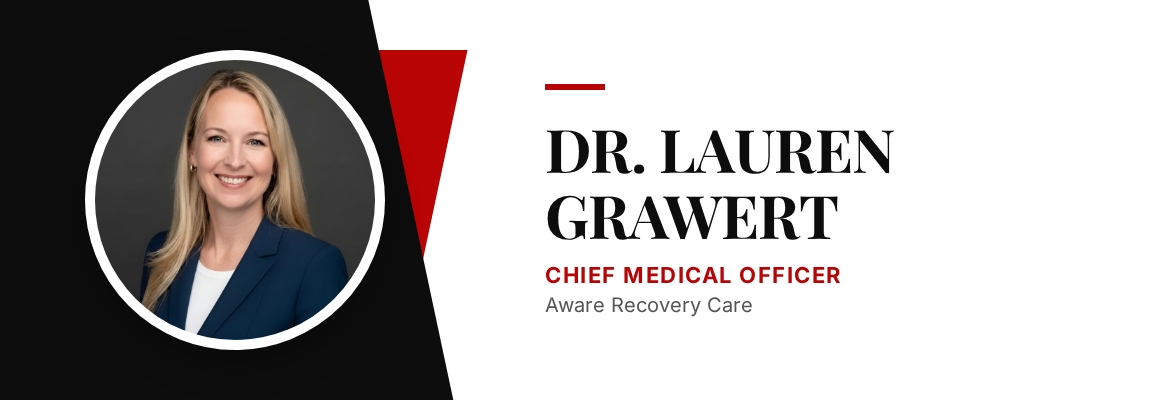
Dr. Lauren Grawert holds the clinical leadership perspective at Aware Recovery Care, an organization delivering home-based addiction treatment across multiple states, one of the most logistically demanding care delivery models in behavioral health.
For Dr. Grawert, the clinical imperative shapes how she thinks about AI. Home-based recovery care lives or dies on coordination quality. When a patient is receiving treatment in their own environment, the margin for operational error is narrow. AI-assisted intake pattern analysis, census forecasting, and staffing gap identification give Aware’s leadership team the operational visibility to stay ahead of coordination failures before they become clinical failures. Dr. Grawert’s framing is worth noting: she isn’t talking about AI as a cost-cutting tool. She’s talking about it as a clinical quality lever, because in community-based care, operational breakdowns have direct patient consequences.
Charm Lea - President, Ascension Recovery Services
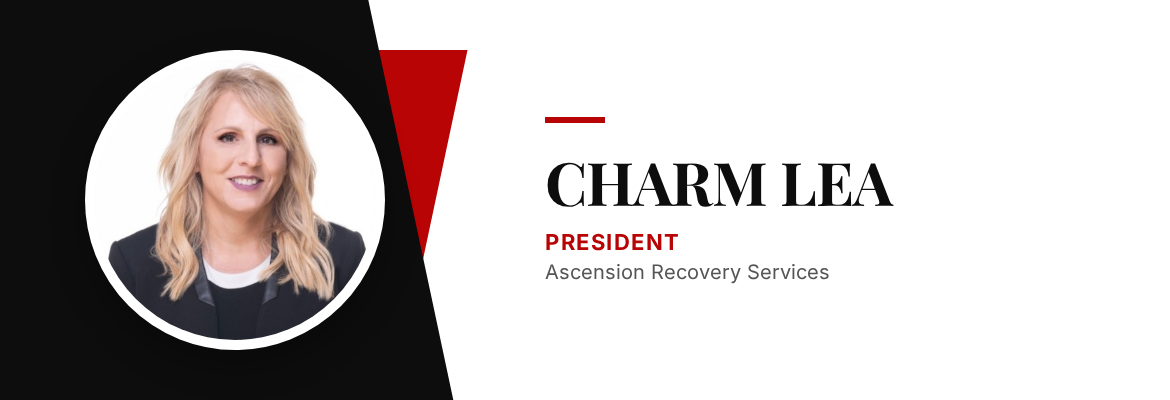
Charm Lea navigates the operational intersection of inpatient SUD treatment and Medicaid managed care, an environment where revenue cycle performance and clinical operations are more deeply entangled than in most behavioral health settings.
As President of Ascension Recovery Services, Lea’s operational focus lands squarely on the workflows that consume the most time without adding the most clinical value: utilization management documentation, prior authorization pre-screening, and denial trend analysis. These aren’t glamorous functions, but they’re the ones that determine whether a treatment program is financially sustainable. Lea sees AI as a way to compress the cycle between a denial landing in the queue and a substantive, well-documented response going back to the payer, not by automating the clinical judgment in that response, but by reducing the time it takes a skilled human to build it. That distinction matters enormously in an environment where days in AR and clean claim rates directly affect program viability.
Dr. Kathryn Boger - Co-Founder and Chief Clinical Officer, InStride Health
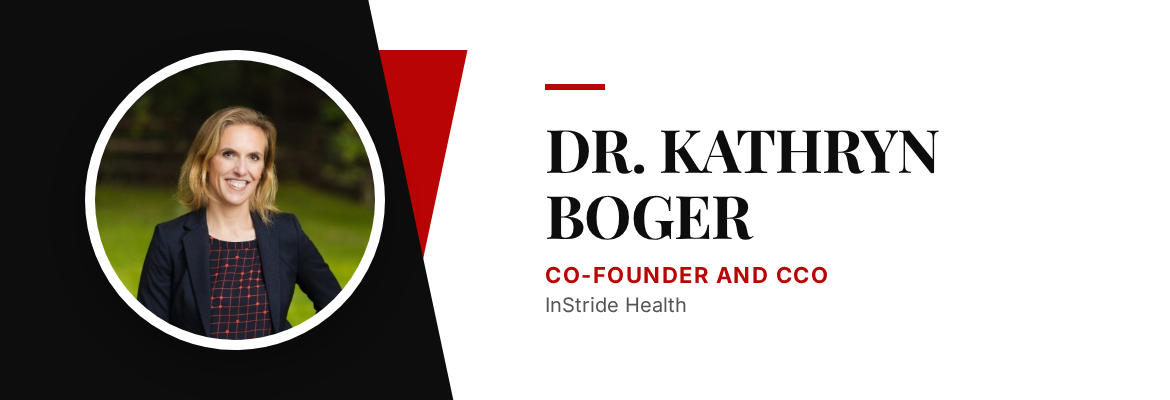
Dr. Kathryn Boger sits at the clinical-operational boundary that is most revealing about where AI genuinely belongs in behavioral health. As Co-Founder and Chief Clinical Officer of InStride Health, which delivers hybrid adolescent behavioral health care, Dr. Boger has to hold both clinical quality and operational performance in view simultaneously.
Her perspective is sharper than most on the question of AI’s actual value. Dr. Boger doesn’t ask whether AI is fast or efficient. She asks whether it’s helping leaders ask better questions of their own data, or just generating faster outputs of the same insufficient information they already had. For InStride, operating in the complex intersection of adolescent behavioral health, hybrid care delivery, and payer dynamics, the difference between those two outcomes is significant. AI that surfaces meaningful patterns in clinical and operational data is an asset. AI that produces volume without insight is noise. Distinguishing between the two is itself a leadership skill.
Howard Barker - Director of Business Development, Your Behavioral Health
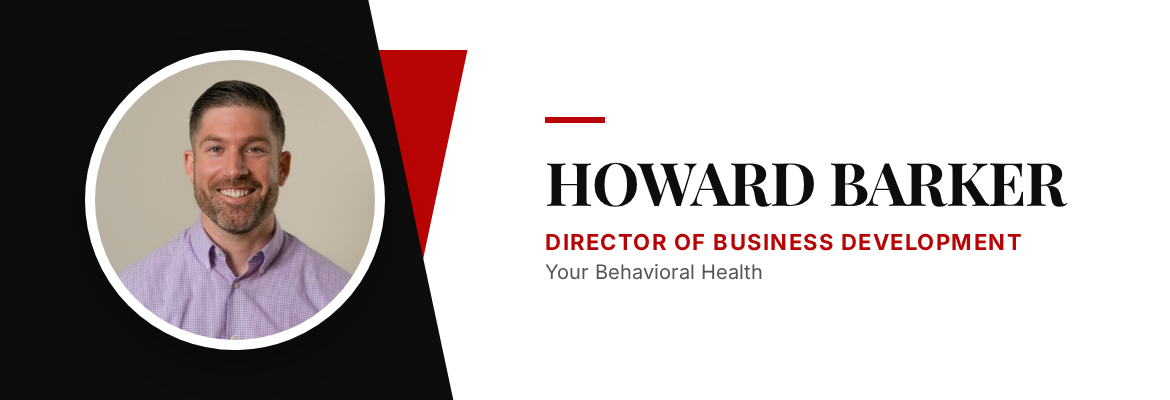
Howard Barker works closest to the community mental health end of the spectrum, the direct-care environment where the distance between operational decisions and patient experience is shortest.
At Your Behavioral Health, Barker’s perspective grounds the whole conversation in what behavioral healthcare is fundamentally built around. The therapeutic relationship. The human connection. The clinical intuition that builds from years of patient encounters and can’t be replicated by any system. Barker’s view is consistent with what clinical leaders across the field have said: AI can do a great deal for the administrative system surrounding patient care, and organizations that use it well will be better equipped to protect the time and energy of the people delivering that care. But the care itself, in community mental health as much as anywhere in behavioral health, remains irreducibly human.
The Line Every Leader Holds
Across these seven perspectives, one thread is entirely consistent: the most thoughtful behavioral health executives are not asking whether AI can do more. They’re asking whether it’s doing the right things.
The risk isn’t replacement. It’s rationalization, using AI adoption as a justification for reduced staffing in an industry that already operates with too little margin. Rob Marsh of Bradford Health Services put it plainly: the organizations that will use AI most responsibly are the ones that can hold the distinction between efficiency gain and care reduction, and refuse to let financial pressure blur it.
Alon Joffe’s principle is worth returning to: the session belongs entirely to the human in the room. Dr. Lauren Grawert’s clinical framing extends that principle beyond the individual encounter; the coordination quality that keeps a patient in recovery is also a human function, even when AI helps it run more reliably.
This isn’t a theoretical debate. The field has learned, sometimes painfully, what happens when the drive for operational efficiency overruns clinical integrity. The executives in this piece are navigating a different question: how to let AI handle the administrative weight so that human judgment, expensive, irreplaceable, and increasingly scarce, can be directed where it matters most.
The Leadership Skill Nobody's Naming Yet
There is a quiet competency gap opening in behavioral health leadership between executives who understand how to use AI as an intelligence tool and those who don’t. Dr. Kathryn Boger and Dr. Monika Roots both reflect a pattern increasingly visible among clinicians who moved into executive roles: they apply the same rigor to evaluating AI output that they once applied to clinical evidence. They ask about the source, the limitation, the appropriate use case.
That disposition, critical engagement rather than passive adoption, is what separates leaders who use AI to make better decisions from those who use it to make faster ones. Charm Lea’s focus on revenue cycle workflows and Dr. Grawert’s focus on care coordination quality both reflect this: AI is most valuable when it extends skilled human decision-making, not when it attempts to substitute for it.
What the Next Chapter Looks Like?
The behavioral health organizations best positioned for the next five years are not the ones that automate most aggressively. They’re the ones, like Bradford Health Services, Eleos Health, Bend Health, Aware Recovery Care, Ascension Recovery Services, InStride Health, and Your Behavioral Health, that are thinking clearly about where efficiency belongs and where human presence is non-negotiable.
Operational efficiency and human-centered care are not opposing values in this field. The administrative burden AI can relieve- documentation, prior authorizations, denial management, credentialing workflows, claims analysis- is not the core of what makes behavioral health work. It’s the friction around it. Removing that friction doesn’t diminish care. Done responsibly, it protects it.
The executives who build that understanding into how their organizations operate won’t just lead more sustainable practices. They’ll lead ones that attract and retain the people doing the work that AI still can’t touch, and probably never should.
Managing behavioral health operations across multiple providers or states?
The Behavioral Health Operations Playbook covers billing workflows, denial prevention, RCM KPIs, and operational benchmarks for practices at every scale.