Addressing the Growing Need for Behavioral Health Services
The demand for behavioral health services has skyrocketed in recent years due to factors such as the increased awareness of mental health issues, rising rates of anxiety and depression, and the COVID-19 pandemic’s lasting impact on mental well-being.The market is projected to grow from USD 87.82 billion in 2024 to USD 132.46 billion by 2032 ( Fortune Business Insights ) Unfortunately, many hospitals are not equipped to handle the volume and complexity of behavioral health needs on their own. They face challenges such as staffing shortages, limited infrastructure, and a lack of specialized expertise in mental health.
Behavioral Health Joint Ventures between hospitals and behavioral health providers offer an effective solution to these challenges. By partnering with specialized behavioral health organizations, hospitals can gain access to the resources, expertise, and infrastructure needed to provide comprehensive care. This collaboration helps bridge the gap between medical and mental health services, ensuring patients receive the holistic care they need.
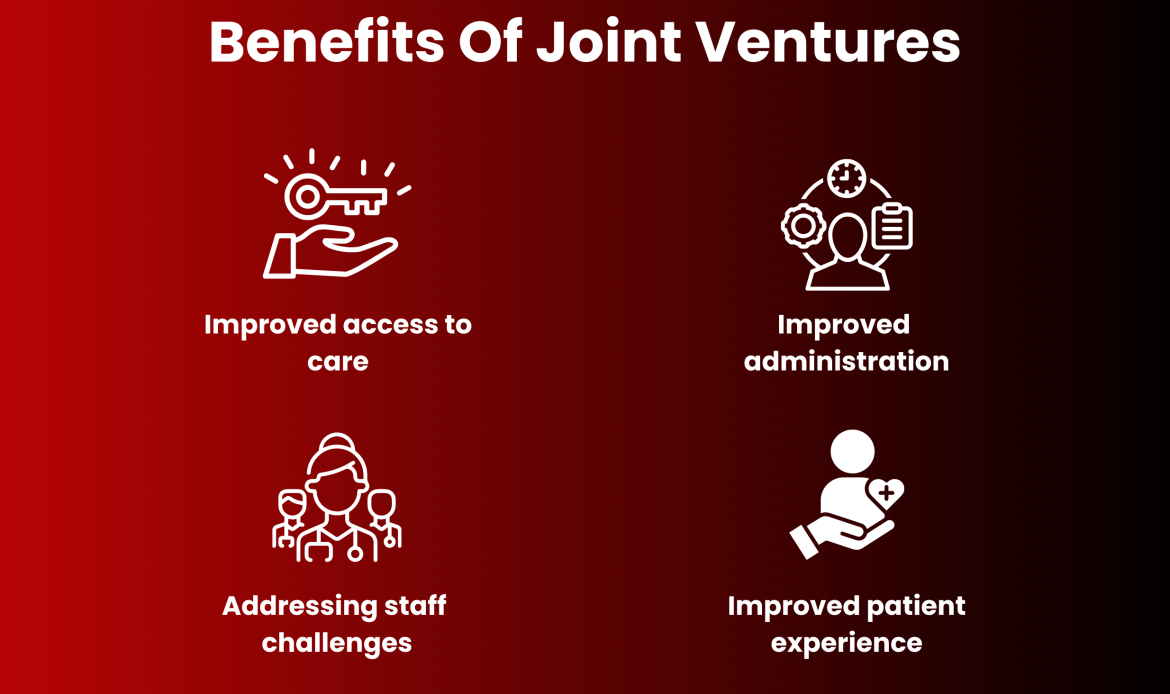
The Benefits of Behavioral Health Joint Ventures in Behavioral Health Care
1. Enhanced Access to Behavioral Health Services
One of the primary benefits of Behavioral Health Joint Ventures is the ability to expand access to behavioral health services. By partnering with specialized providers, hospitals can offer a broader range of services, from inpatient and outpatient care to crisis intervention and community support. This expanded access is crucial for addressing the growing need for mental health services, especially in underserved areas where behavioral health resources are limited.
Behavioral Health Joint Ventures also allow hospitals to leverage the expertise of specialized providers, ensuring patients receive high-quality care from professionals who understand the complexities of mental health conditions. This collaboration helps improve patient outcomes and reduces the burden on emergency departments, which are often overwhelmed by behavioral health cases.
2. Financial and Operational Efficiency
Behavioral Health Joint Ventures can also bring significant financial and operational benefits to hospitals. By sharing resources and expertise, hospitals can reduce the costs associated with establishing and maintaining behavioral health services. This includes expenses related to staffing, training, facility upgrades, and regulatory compliance.
Furthermore, Behavioral Health Joint Ventures allow hospitals to streamline their operations by integrating behavioral health services into their existing care models. This integration helps reduce redundancies, improve communication between medical and behavioral health providers, and ensure patients receive coordinated care. By optimizing operational efficiency, hospitals can focus on providing high-quality care while maintaining financial stability.
3. Improved Patient Experience
A key advantage of Behavioral Health Joint Ventures is the ability to improve the patient experience. Behavioral health issues often coexist with physical health conditions, making it essential for patients to receive integrated care. Behavioral Health Joint Ventures enable hospitals to provide a seamless continuum of care, ensuring patients receive the support they need for both their physical and mental health.
By collaborating with specialized behavioral health providers, Behavioral health hospital partnerships with behavioral healthcare can offer a more patient-centered approach to care. This includes personalized treatment plans, coordinated follow-up care, and access to a wider range of support services. Patients benefit from a more holistic approach to their health, leading to better outcomes and higher satisfaction.
4. Addressing Staffing Challenges
Staffing shortages are a significant barrier to providing behavioral health services in hospitals. Behavioral Health Joint Ventures help address this issue by allowing hospitals to leverage the workforce of their partner organizations. This collaboration ensures that hospitals have access to the specialized staff needed to deliver high-quality behavioral health care, including psychiatrists, therapists, and social workers.
By partnering with behavioral health providers, Behavioral health hospital partnerships with behavioral healthcare can also benefit from shared training programs and professional development opportunities. This helps ensure that staff are well-equipped to handle the complexities of behavioral health care, leading to better patient outcomes and a more efficient care delivery model.
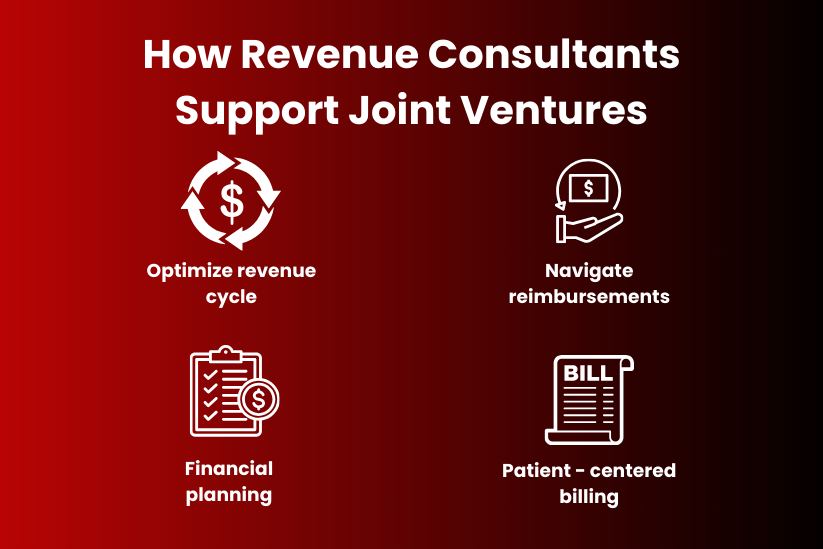
How Revenue Consultants Can Support Behavioral Health Joint Ventures in Behavioral Health
Revenue cycle consultants play a crucial role in helping hospitals and behavioral health providers establish and maintain successful Behavioral Health Joint Ventures. By providing expertise in revenue cycle management, reimbursement strategies, and financial planning, revenue consultants can help healthcare organizations maximize the benefits of Hospital partnerships in behavioral care. Here are some key ways in which revenue consultants can support Behavioral Health Joint Ventures in behavioral health:
1. Optimizing Revenue Cycle Management
Effective revenue cycle management is essential for ensuring the financial success of Behavioral Health Joint Ventures in behavioral health. Revenue consultants can help healthcare organizations optimize their revenue cycle processes, from patient registration and billing to claims submission and reimbursement. By streamlining these processes, revenue consultants can help hospitals and behavioral health providers maximize their revenue and reduce administrative burdens.
Revenue consultants can also identify opportunities for automation and technology integration, helping healthcare organizations reduce manual processes and improve efficiency. This can lead to faster reimbursement, fewer denied claims, and improved cash flow, all of which are critical for maintaining the financial stability of Behavioral Health Joint Ventures.
2. Navigating Reimbursement Challenges
Behavioral health services often face unique reimbursement challenges, including complex billing codes, varying coverage policies, and limited reimbursement rates. Revenue consultants can help hospitals and behavioral health providers navigate these challenges by developing effective reimbursement strategies and ensuring compliance with payer requirements.
By staying up-to-date on the latest changes in reimbursement policies and regulations, revenue consultants can help healthcare organizations avoid common pitfalls and maximize their reimbursement for behavioral health services. This expertise is especially valuable in Behavioral Health Joint Ventures, where multiple stakeholders must work together to ensure financial success.
3. Financial Planning and Analysis
4. Enhancing Patient-Centered Billing
Patient-centered billing is a key component of the overall patient experience in behavioral health care. Revenue consultants can help healthcare organizations develop billing practices that are transparent, easy to understand, and patient-friendly. This includes providing clear explanations of charges, offering flexible payment options, and ensuring patients have access to the information they need to make informed decisions about their care.
By enhancing patient-centered billing practices, revenue consultants can help hospitals and behavioral health providers build trust with their patients, reduce billing-related stress, and improve overall patient satisfaction. This is especially important in behavioral health care, where patients may already be experiencing significant emotional and financial challenges.
The Future of Behavioral Health Joint Ventures in Behavioral Health
As the demand for behavioral health services continues to grow, Behavioral Health Joint Ventures will play an increasingly important role in helping hospitals expand their capacity and improve access to care. By partnering with specialized behavioral health providers, hospitals can overcome the challenges associated with providing mental health services, including staffing shortages, financial constraints, and regulatory complexities.
Revenue consultants will continue to play a critical role in supporting Behavioral Health Joint Ventures, helping healthcare organizations optimize their revenue cycle processes, navigate reimbursement challenges, and develop patient-centered billing practices. By leveraging the expertise of revenue consultants, hospitals and behavioral health providers can create successful Hospital partnerships in behavioral care that deliver high-quality, integrated care to patients in need.