

Table of Contents
Every investment a behavioral health organization makes is also a signal about what it believes will determine performance in the years ahead.
The executives leading some of the country’s most active behavioral health organizations are navigating a complicated environment of federal funding uncertainty, Medicaid pressure, workforce strain, and payer volatility and still making deliberate bets on growth. What they are choosing to invest in, and why, reveals something important about where the field is heading.
The Shift From Spending More to Spending Smarter
The behavioral health leaders making the most deliberate investments in the current environment share a common discipline: they are only allocating where they expect a measurable return.
Derek Bullard of Already Autism Health put this plainly. With Medicaid uncertainty creating unpredictable revenue conditions, the company’s 2026 investments are concentrated on operations and technology areas that improve performance regardless of what funding does. The logic is defensive and forward-looking simultaneously.
Rob Marsh of Bradford Health Services reflects the same thinking. Technology and AI are absorbing significant Bradford resources in 2026 not as a growth expense, but as a modernization investment that will make clinical operations more predictable, analytics more actionable, and administrative workflows less dependent on headcount.
What 10 Leaders From 3 Sectors Are All Saying at Once?
Across mental health, SUD, and autism care, the same three investment categories are emerging consistently: technology and AI, geographic and service expansion, and workforce paired with payer strategy.
Technology and AI
Behavioral health organizations are moving beyond basic digital tools toward AI-driven platforms that directly reduce clinician burden and improve care delivery. The investment thesis is consistent: technology that creates operational efficiency also creates clinical capacity and in a market defined by workforce strain, that distinction matters.
Matthew Zubiller — CEO, Your Behavioral Health

Thoughtfully applied technology supports clinicians by streamlining documentation, billing, and patient engagement amplifying human connection rather than replacing it.
The goal is freeing clinicians to focus on what matters most: meaningful care.
Rob Marsh — CEO, Bradford Health Services

Bradford is committing significant resources to AI and technology to modernize clinical operations, improve predictive analytics for patient care, and optimize administrative workflows.
These investments directly support Bradford’s parallel goal of expanding into underserved regions with 8 to 10 new outpatient centers.
Marc Baer — COO, Hazelden Betty Ford Foundation
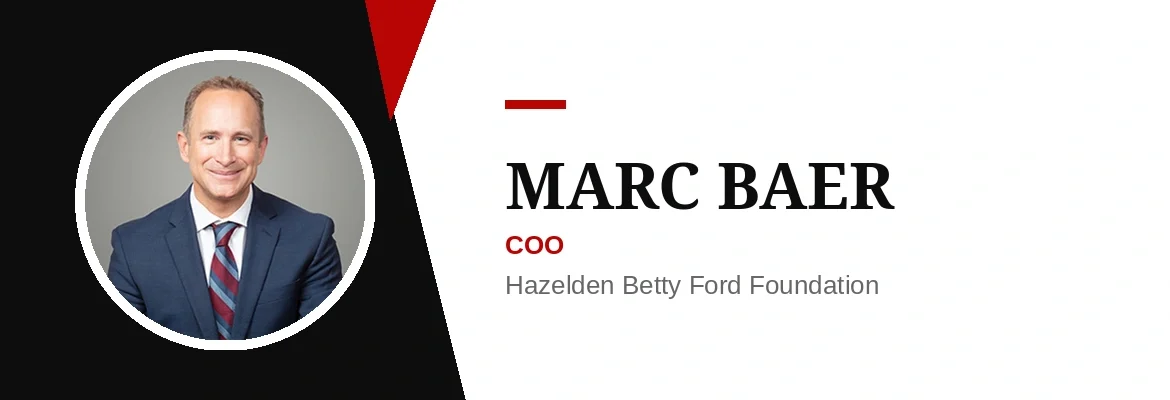
Hazelden Betty Ford will direct 2026 investment toward technology enhancements designed to create efficiencies and increase access to care.
These investments build on its newly launched co-occurring mental health and SUD care model, integrating both services under one clinical framework.
Dr. Alethea Varra — Chief Clinical Officer, Lyra Health
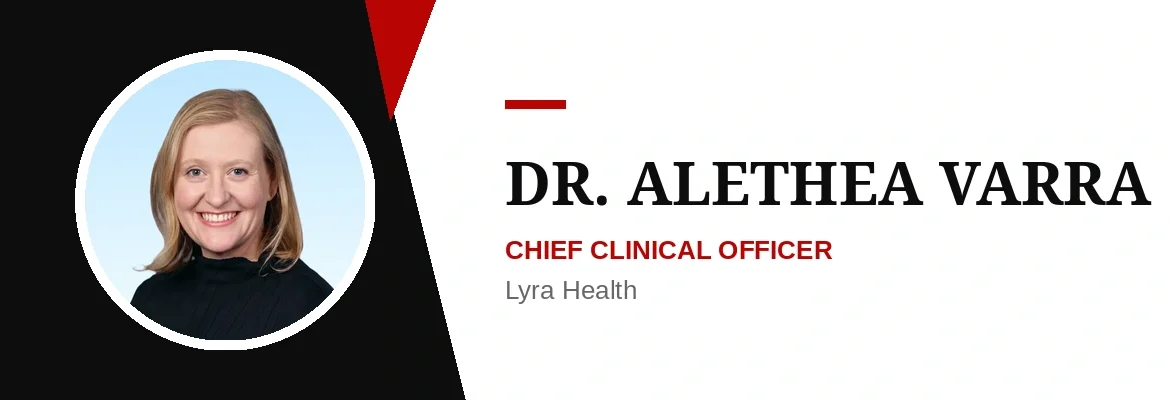
Lyra is building on its AI platform to personalize care, simplify clinical workflows, and support providers with safety and quality guiding every step.
Human connection remains central; technology is the infrastructure that enables better, more consistent care delivery at scale.
Alex Katz — Founder and CEO, Two Chairs

Two Chairs is investing heavily in AI to reduce administrative work for clinicians, increase face-to-face patient time, and make the care experience smoother and more personalized.
The platform investment runs alongside psychiatry expansion, clinical hiring, and value-based payer partnerships tied to measurable outcomes.
Derek Bullard — CEO, Already Autism Health

With Medicaid uncertainty at both federal and local levels, Autism Health is concentrating 2026 investment on operations and technology.
The reasoning is deliberate: these investments expand access to care regardless of funding shifts and make it easier for clinical teams to do their best work.
Market Expansion
Despite ongoing reimbursement and policy uncertainty, several behavioral health organizations are pressing forward with geographic and service expansion targeting underserved markets, higher-acuity care gaps, and both physical and virtual delivery channels.
Rob Marsh — CEO, Bradford Health Services
Bradford’s acquisition pipeline has grown substantially and the company plans to deploy capital toward M&A alongside 8 to 10 new outpatient and sober living facility openings.
Expansion is focused specifically on underserved regions where access to addiction treatment remains limited.
Dr. Rupert McCormac — Founder and CEO, Crossroads Treatment Centers
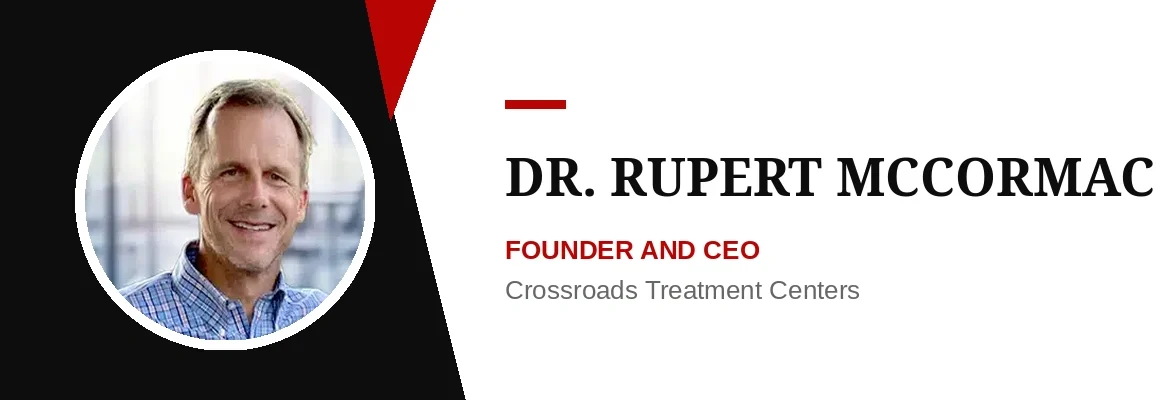
Crossroads plans to complete several acquisitions in 2026 that could more than double its footprint across its existing nine states.
The company is also investing in peer support services, case management, and measurement-based care screening to deepen the clinical model alongside geographic growth.
Emily Pedersen — VP of Operations, Your Behavioral Health

Your Behavioral Health will open two new residential mental health facilities and add virtual IOP capacity to serve more people needing higher-acuity care.
These moves expand both physical and digital access reaching patients across care levels who might otherwise go unserved.
Stephanie Strong — CEO, Boulder Care
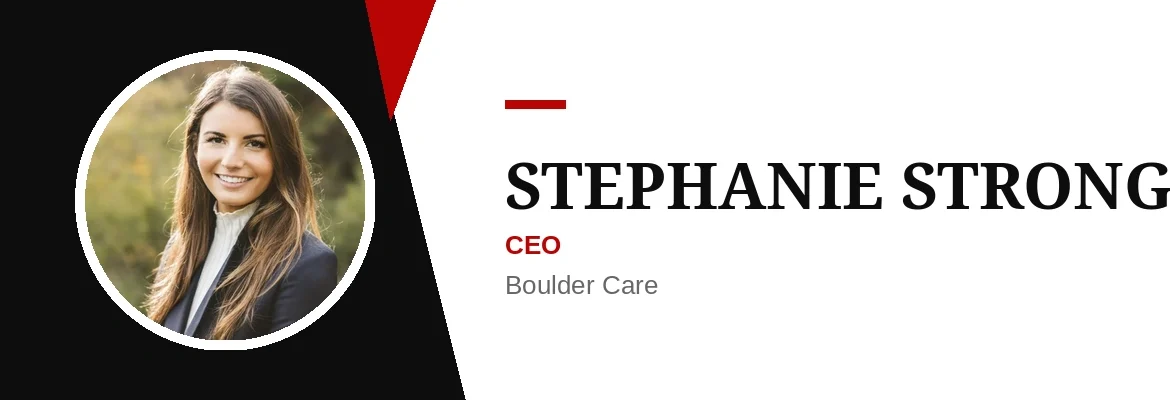
Boulder Care is expanding into new geographies while its existing markets continue rapid growth; one state grew more than 150% last year.
The company will double its patient-facing team alongside geographic expansion, with demand for addiction treatment driving momentum nationwide.
Ankit Gupta — CEO, Bicycle Health

Bicycle Health is building new care pathways for criminal justice-impacted populations and deepening partnerships across the private and public sectors at the state and local level.
These investments are especially critical as federal funding cuts take effect, making public-private collaboration a strategic necessity rather than an optional pursuit.
Workforce, Payer Relations and Partnerships
The workforce and payer investments emerging across the sector reflect a shared understanding: sustainable growth requires both the clinical teams to deliver care and the payer relationships to fund it. Value-based arrangements tied to measurable outcomes are becoming the architecture for both.
Alex Katz — Founder and CEO, Two Chairs
Two Chairs is growing its clinical team, extending therapy and psychiatry coverage into more markets, and investing in retention to support its fully integrated care model.
Payer partnerships are being built around measurable quality benchmarks actively pushing the industry toward value-based care with accountability built in.
Stephanie Strong — CEO, Boulder Care
Boulder is deepening value-based arrangements with health plans in every community it serves, demonstrating that better outcomes and lower costs can coexist.
As Medicaid programs face unprecedented pressure to deliver both impact and efficiency, Boulder’s model is positioned to prove that case directly to payers.
Dr. Rupert McCormac — Founder and CEO, Crossroads Treatment Centers
Crossroads is expanding its value-based care model with investments in additional patient support services including peer support and case management to drive measurable outcomes alongside access.
These investments tie directly to its acquisition-led expansion strategy, building a stronger clinical foundation in each market it enters.
Ankit Gupta — CEO, Bicycle Health
Partnership and collaboration investments across private and public sectors at the state and local level are a direct response to the gap that federal funding cuts will leave behind.
For organizations serving underinsured and justice-impacted populations, these relationships are not supplementary. They are the revenue infrastructure.
Building Operational Strength Starts With the Revenue Cycle.
BehavioralProz works with behavioral health organizations to build the billing infrastructure, denial management workflows, credentialing systems, and reporting foundations that support sustainable clinical and financial performance. If your revenue cycle is creating administrative drag rather than operational clarity, that is the right place to start.
The Organizations That Will Lead Next
The behavioral health organizations best positioned for the next phase are not the ones that spent the most. They are the ones that invested most intentionally in technology that reduces administrative burden without replacing human connection, in geographic expansion tied to demonstrated demand, in workforce strategies that address retention at the structural level, and in payer relationships built on measurable outcomes.
These investments compound. An organization that has reduced documentation burden, expanded access through both physical and virtual channels, and built payer partnerships grounded in outcomes data is entering a volatile market environment from a structurally stronger position.
The strongest behavioral health organizations are not defined by how much they spend. They are defined by how intentionally they invest in people, technology, operations, and measurable outcomes and how clearly they can connect every investment to the performance they are trying to build.