

Behavioral health billing will change annually, and 2025 brings critical updates that healthcare leaders like you need to know. From CPT code updates and ICD-10 revisions to telehealth billing adjustments and regulatory compliance, these changes are set to impact the way you manage your revenue cycle. Staying ahead of these updates ensures compliance, minimizes claim denials, and optimizes reimbursements for your organization.

Key Behavioral Health Billing Updates for 2025
With an increasing focus on improving access to mental health services, 2025 introduces significant billing adjustments that align with mental health parity laws and technological advancements. These updates include:
- Greater transparency in reimbursement processes.
- Revised documentation and coding standards.
- Expanded telehealth billing regulations.
Understanding these changes will help your organization avoid costly errors and streamline by using expert behavioral health billing services.
New Behavioral Health Billing Guidelines
Billing guidelines for behavioral health services are undergoing substantial revisions to enhance accuracy and compliance. Here are the most impactful changes:
Updated Documentation Standards
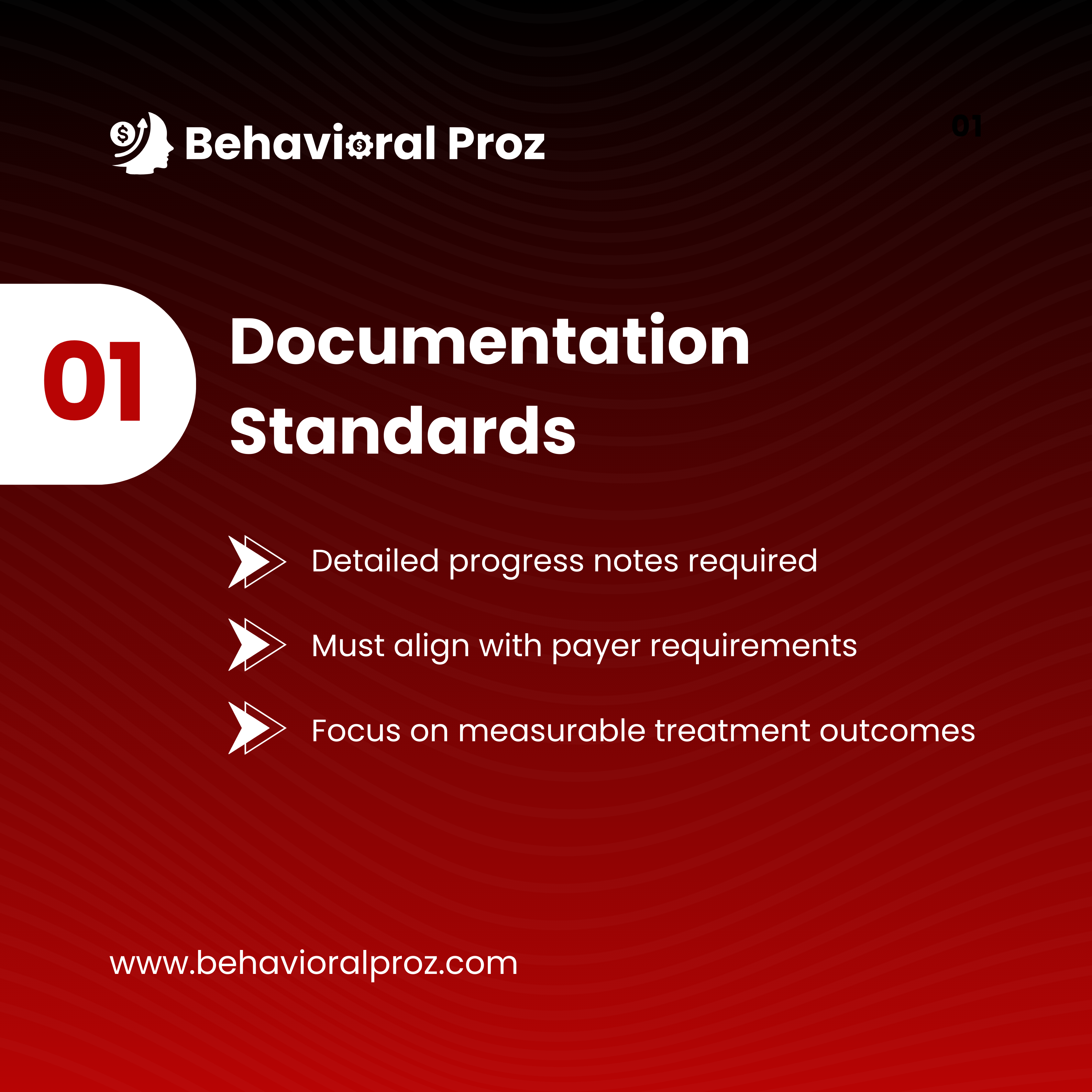
Your providers must now include more detailed progress notes that outline measurable treatment outcomes. These enhancements align with payer requirements and improve claim acceptance rates.
Time-Based Service Adjustments
Your providers must now include more detailed progress notes that outline measurable treatment outcomes. These enhancements align with payer requirements and improve claim acceptance rates.
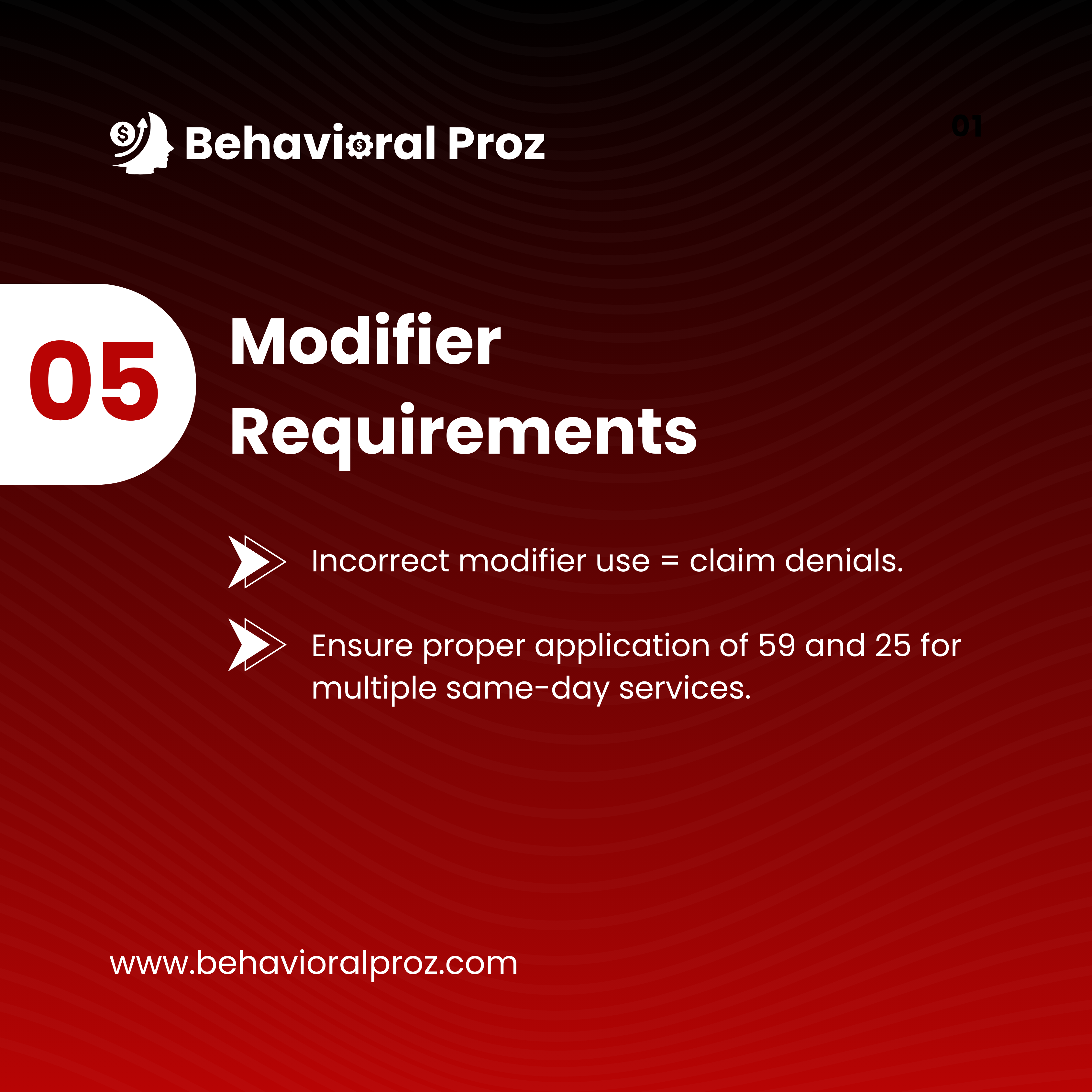
Modifier Requirements
To differentiate multiple services rendered on the same day, payers now mandate the correct use of modifiers. Key modifiers such as -59 (distinct procedural service) and -25 (separately identifiable evaluation and management service) are essential for avoiding claim denials.
Changes to Group Therapy Billing
New documentation requirements for group therapy specify the need for individualized patient contributions, ensuring a more detailed and transparent billing process.
ICD-10 Updates for Behavioral Health Billing
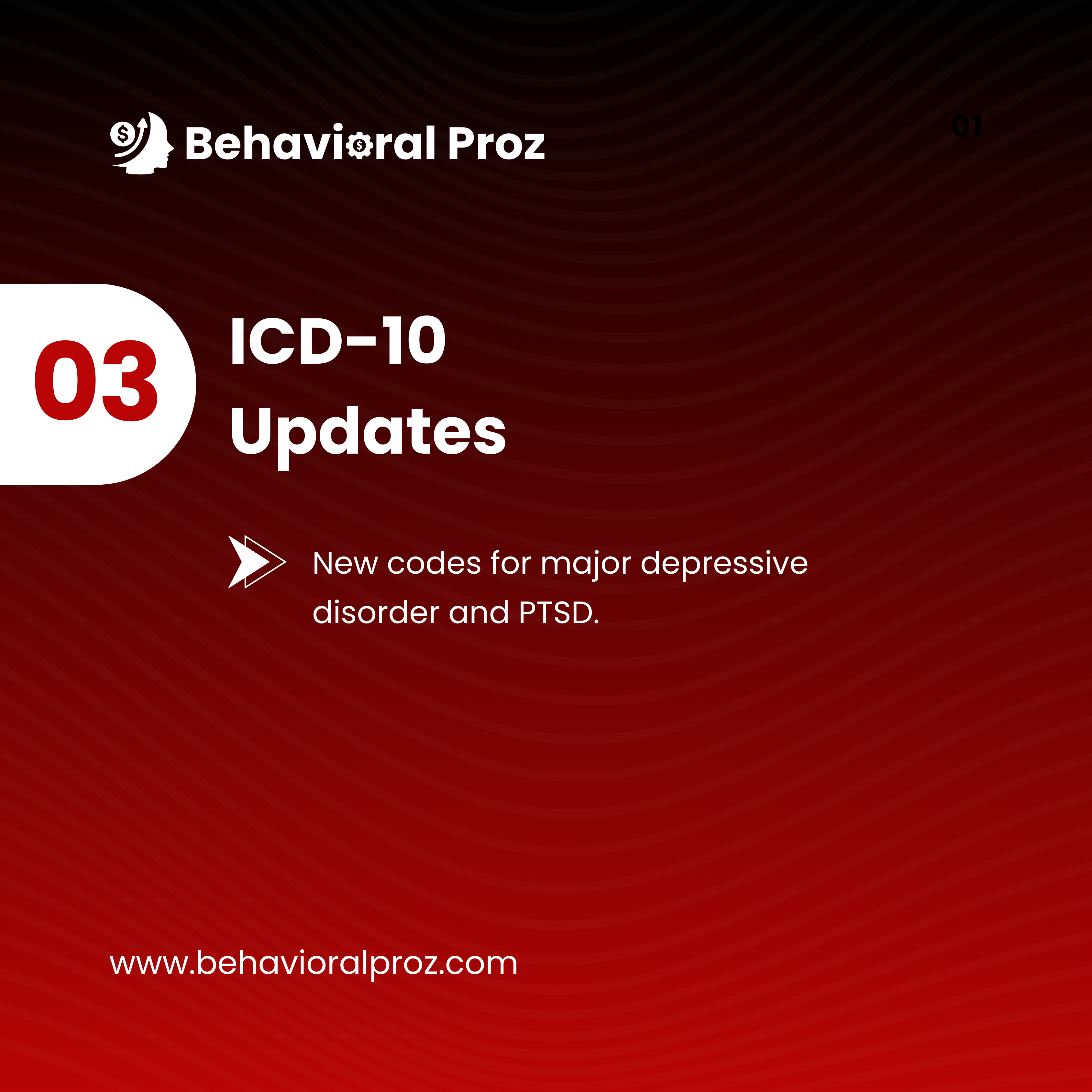
ICD-10 revisions for 2025 introduce new diagnostic codes and updated definitions, refining the classification of mental health conditions. These include:
New Codes
- F32.A – Major depressive disorder, single episode, mild with anxious distress.
- F43.8A – Prolonged grief disorder, recognizing a condition previously underrepresented.
Updated Definitions
- F41.1 – Generalized anxiety disorder now includes new subcategories to distinguish severity levels.
Enhanced Specificity
- F43.1 – PTSD updates provide clearer distinctions between acute, chronic, and delayed onset cases.
Ensuring that your team is trained on these ICD-10 updates is crucial to maintaining coding accuracy and reducing claim rejections.
CPT Code Changes for Behavioral Health Billing
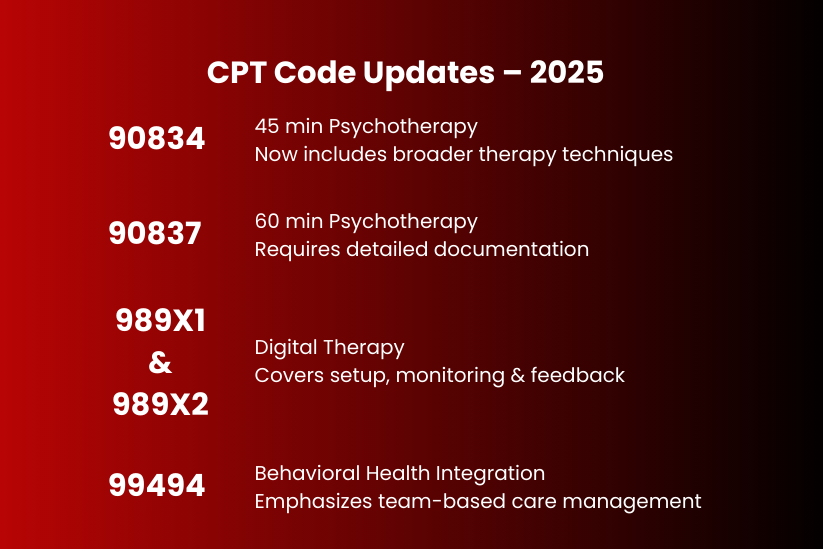
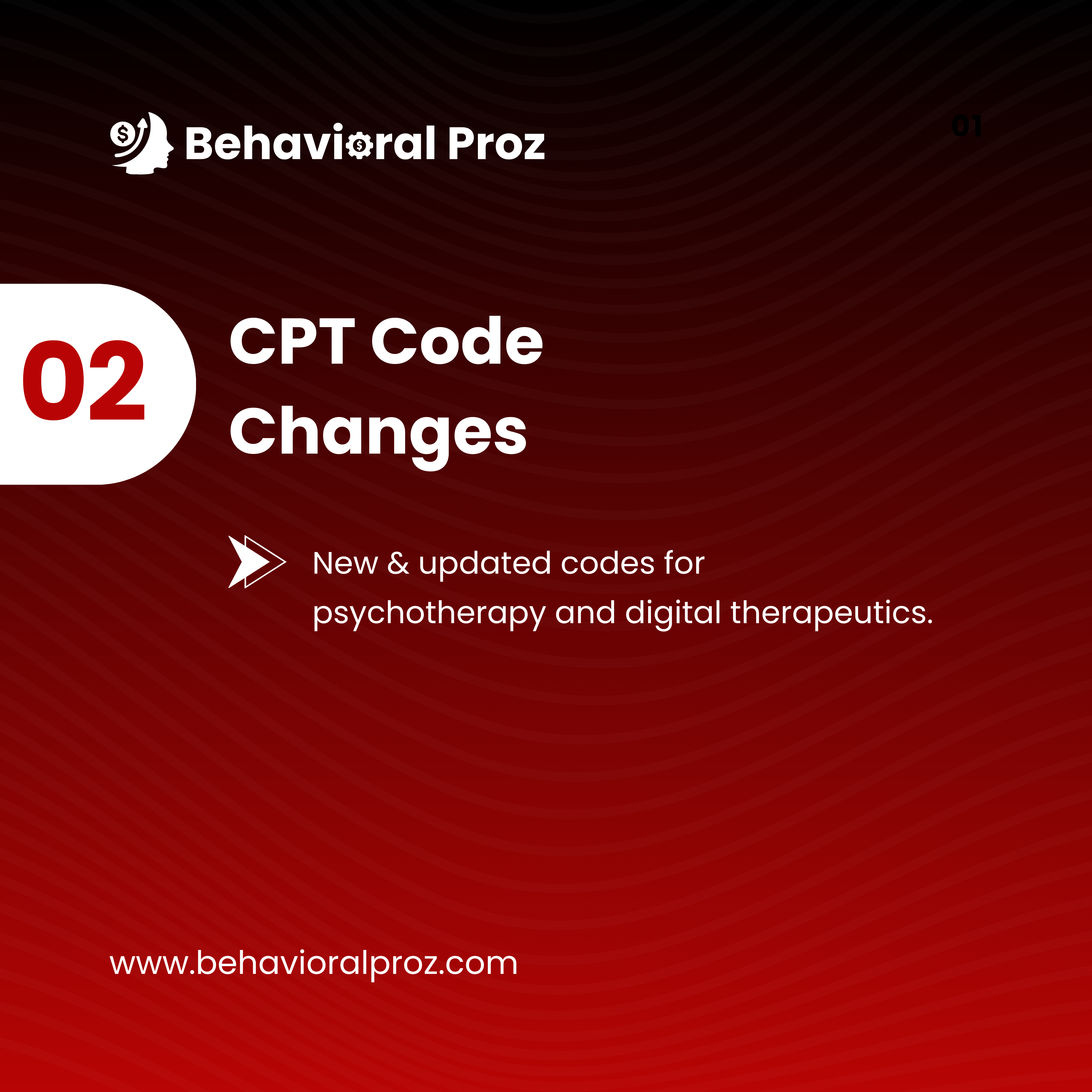
The 2025 CPT code updates enhance clarity and hiring behavioral health billing services that are skilled in various behavioral health guidelines enables you to keep updated with the changes in CPT codes. Key revisions include:
Revised Psychotherapy Codes
- 90834 – Psychotherapy, 45 minutes with the patient, now includes a broader definition to accommodate additional therapeutic techniques.
- 90837 – Psychotherapy, 60 minutes with the patient, now requires more detailed documentation of therapeutic approaches.
New Digital Therapeutic CPT Codes
- 989X1 – Digital behavioral health interventions, initial setup, and patient education.
- 989X2 – Digital behavioral health interventions, monthly monitoring, and feedback.
Behavioral Health Integration (BHI) Updates
- 99494 – Care management services for behavioral health conditions now emphasize team-based care documentation.
Proper implementation of these CPT code updates will improve reimbursement accuracy and enhance service delivery by getting exclusive insights from behavioral health billing services.
Telehealth Billing for Behavioral Health in 2025
Telehealth continues to revolutionize behavioral health care, and 2025 introduces new billing regulations to reflect its growing adoption. Notable updates include:
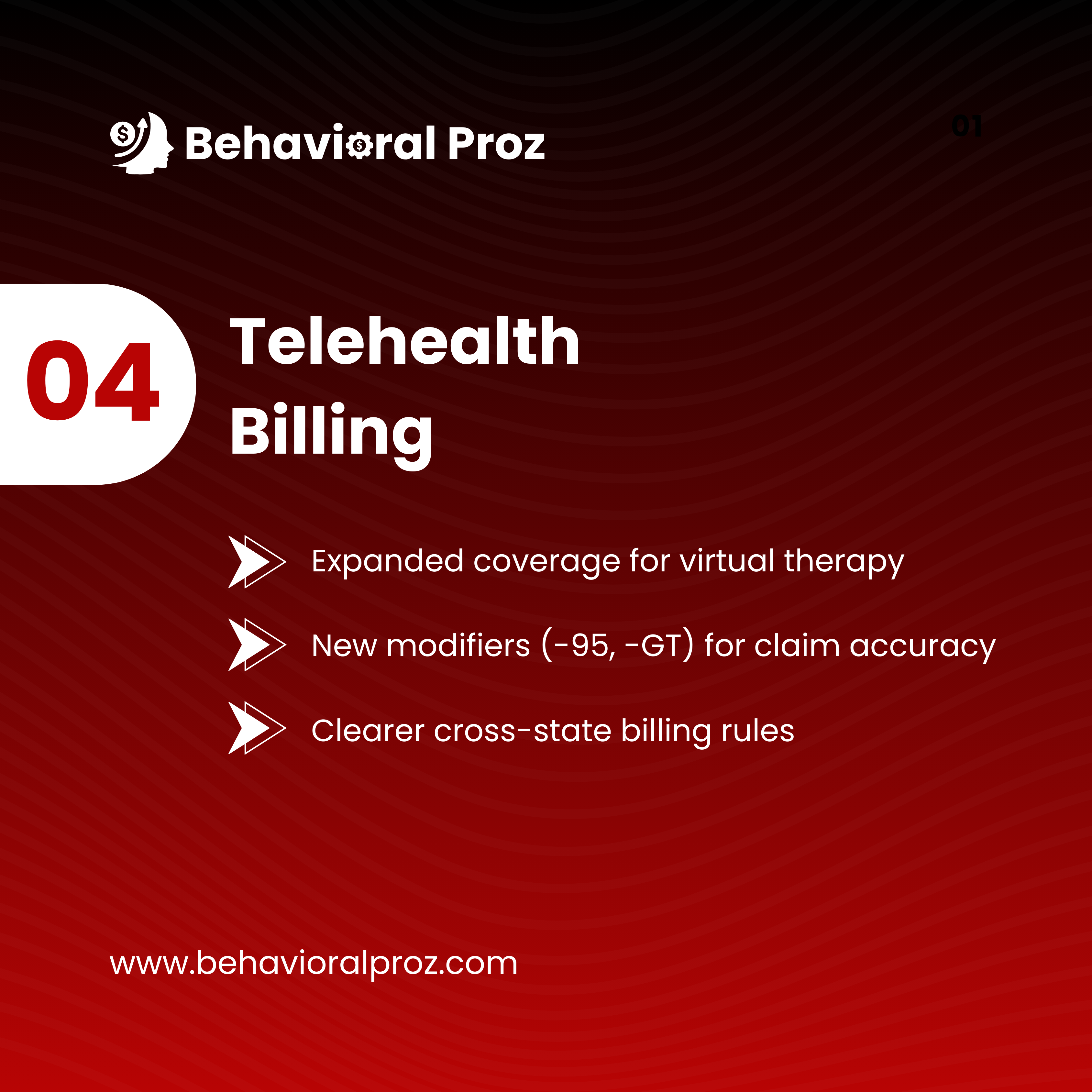
Expanded Telehealth Coverage
More services are now eligible for telehealth reimbursement, including:
- Family therapy (CPT 90846)
- Group therapy (CPT 90853)
New Telehealth Modifiers
To streamline claims processing, payers now require specific telehealth modifiers, such as:
- -95 (Telehealth services via real-time communication)
- -GT (Interactive audio-visual telecommunication)
Cross-State Licensing Considerations
Maximizing Revenue Cycle Management in 2025
With all these updates, optimizing your revenue cycle management strategy is essential to ensuring financial stability. Here are key actions to take:
- Invest in Staff Training: Consult with behavioral health experts to ensure your billing and coding teams understand the latest CPT and ICD-10 updates.
- Leverage Behavioral Health Billing Services: Partnering with experts in behavioral health billing services can streamline claim processing and reimbursement workflows.
- Adopt Technology: Use updated electronic health record (EHR) and billing software that incorporates the latest coding changes.
- Monitor Compliance: Regular audits can help you identify potential errors and improve documentation accuracy.


Final Thoughts
Behavioral health billing in 2025 presents new challenges and opportunities for healthcare organizations like yours. By staying informed about ICD-10 updates, CPT code revisions, and evolving telehealth regulations, you can navigate these changes effectively. Implementing the latest revenue cycle management best practices ensures compliance, reduces claim denials, and enhances financial performance.
For seamless integration of these updates, consider partnering with an experienced behavioral health billing service provider. Expert guidance can help your organization optimize reimbursements and focus on delivering high-quality mental health care.