

It is estimated that more than one in five U.S. adults live with a mental illness (59.3 million in 2022; 23.1% of the U.S. adult population) and yet it is not given equal importance as physical health ( National Institute Of Mental Health ). Integrating behavioral health into primary care has become a focal point for improving patient outcomes. However, one persistent challenge remains: the lack of standardized Behavioral Health Metrics and its relevant revenue cycle management, to effectively measure and evaluate behavioral health services. While physical health has clear, universally accepted benchmarks such as blood pressure levels for hypertension or A1C for diabetes behavioral health often lacks consistent, objective measures for success.
Centerstone, a prominent nonprofit behavioral health provider based in Nashville, Tennessee, is taking proactive steps to address this issue. With decades of experience delivering comprehensive mental health and substance use disorder services, Centerstone recognizes that without clear, standardized Behavioral Health Metrics, it becomes difficult to demonstrate the value and efficacy of behavioral health interventions.
Carol Bean's Leadership and the Push for Better Behavioral Health Metrics
In a recent interview with Becker’s Behavioral Health, Carol Bean, who was appointed as Centerstone’s Chief Operating Officer in 2024, emphasized the organization’s commitment to setting standards for measuring behavioral health. Ms. Bean, who joined Centerstone in 2014 and previously served as the Chief Financial Officer, highlighted the unique nature of her transition:
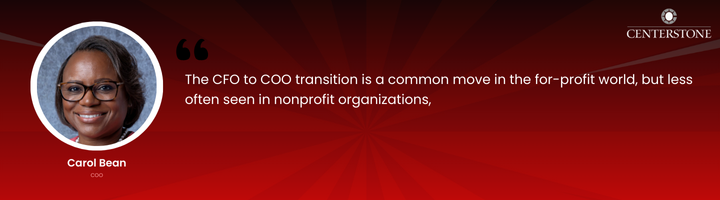
“The CFO to COO transition is a common move in the for-profit world, but less often seen in nonprofit organizations,” Ms. Bean told Becker’s.
This transition signals Centerstone’s increasing focus on operational efficiency and data-driven decision-making in behavioral health services. Ms. Bean’s financial background gives her a strong foundation to develop better ways to quantify and analyze data, ensuring that Centerstone’s clinical operations align with measurable, evidence-based goals.
Why Standardized Behavioral Health Metrics Matter in Behavioral Health
Behavioral Health Metrics provide a common language for clinicians, enabling them to align on treatment goals and measure progress more effectively. The importance of standardized Behavioral Health Metrics in behavioral health cannot be overstated, as they help ensure consistency in care quality, treatment effectiveness, and patient satisfaction.
The Centers for Medicare & Medicaid Services (CMS) has also emphasized the need for measurable quality standards in behavioral health. CMS’s Behavioral Health Strategy outlines key areas such as substance use disorder prevention, treatment, and recovery services. The strategy prioritizes person-centered, timely, and affordable care, which can only be achieved through robust Behavioral Health Metrics that track patient progress and provider effectiveness (CMS).
Centerstone’s Data-Driven Approach
Centerstone operates dozens of outpatient treatment sites across four states, along with two residential centers and one inpatient hospital. This extensive network of patients and Behavioral Health Provider provides a substantial amount of data, which, when analyzed effectively, can lead to improved behavioral health services & patient care and operational efficiency.
Under Ms. Bean’s leadership, Centerstone is actively refining its data analytics capabilities to improve behavioral health outcomes. She elaborates:
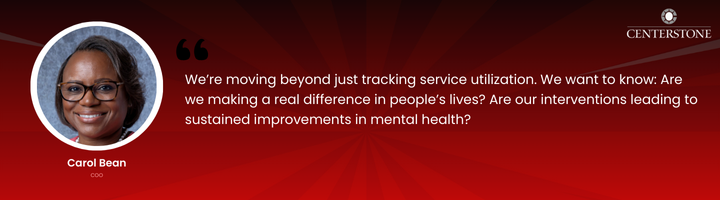
“We’re moving beyond just tracking service utilization. We want to know: Are we making a real difference in people’s lives? Are our interventions leading to sustained improvements in mental health?”
This shift reflects an industry-wide movement toward value-based care, where success is measured not by the volume of services provided but by patient outcomes and quality improvements.
Collaboration with Technology: The Lyssn Partnership
One of Centerstone’s most significant recent initiatives is its partnership with Lyssn, a technology company specializing in artificial intelligence (AI) for behavioral health. This multi-year strategic partnership aims to leverage Lyssn’s AI-powered platform to train Centerstone’s team of more than 3,000 clinicians in the latest evidence-based practices. The collaboration also includes developing new solutions and long-term revenue sharing.
David Atkins, Ph.D., Lyssn’s CEO and co-founder, highlights the significance of this partnership:
“So much of behavioral health care is a conversation. When we’re talking about therapy or counseling or coaching, that conversation is the intervention. The combination of Lyssn’s technology and Centerstone’s clinical expertise can help raise the bar for evaluating quality in behavioral health care.”



Addressing Challenges in Measuring Behavioral Health
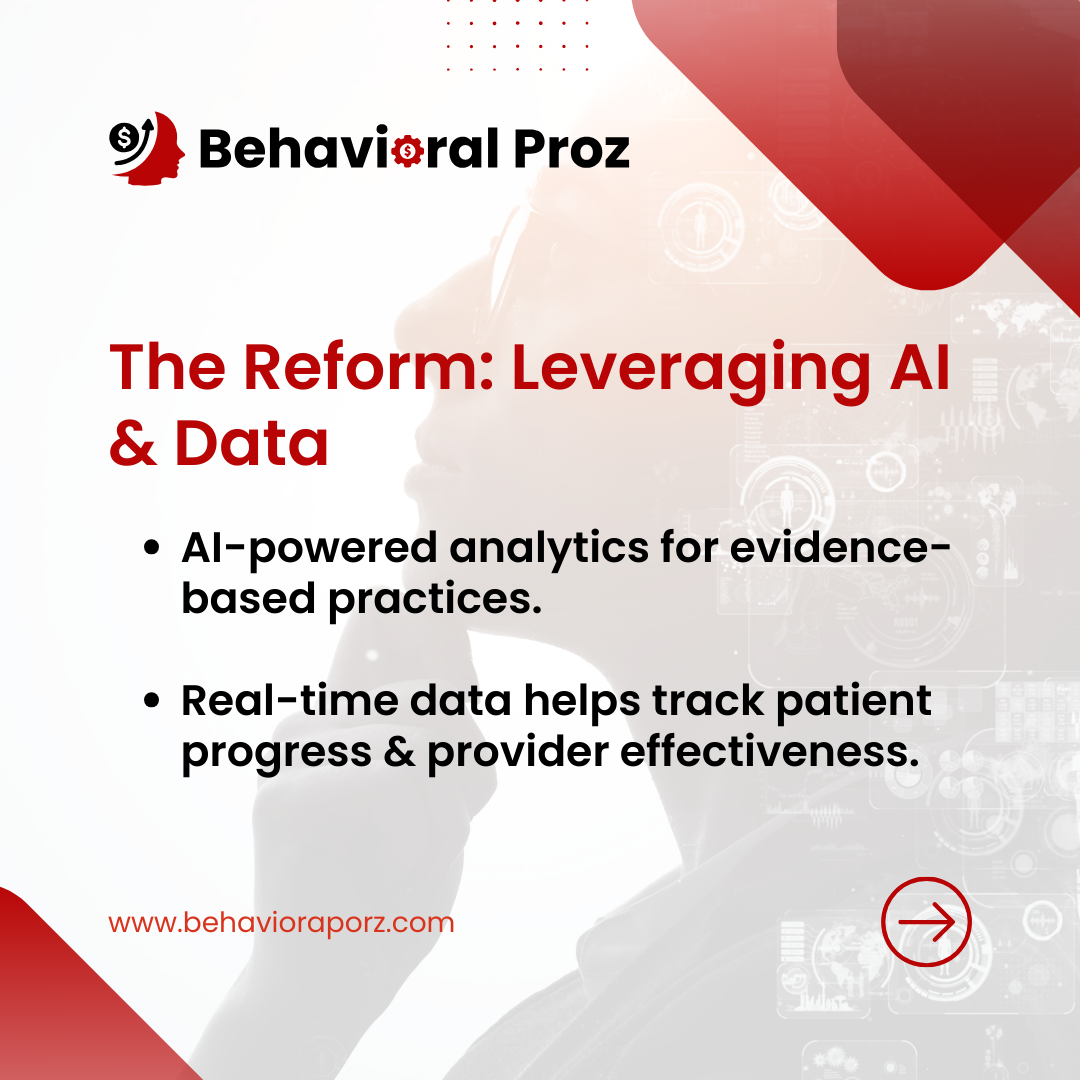
To address this gap, Centerstone is exploring new ways to track patient progress and provider performance across outpatient settings. Ms. Bean underscores the importance of data transparency and real-time analytics:
“We need to get to a point where behavioral health Behavioral Health Metrics are as clear-cut as those in physical health. The more we invest in data-driven insights, the better we can serve our patients.”
The Future of Behavioral Health Metrics
The movement toward standardized behavioral health Behavioral Health Metrics is gaining momentum among the Behavioral Health Providers. Several industry organizations, including the National Committee for Quality Assurance (NCQA), are working to develop more precise behavioral health quality measures. CMS has also introduced new reimbursement models that incentivize quality care rather than quantity of services, further driving the need for robust, objective Behavioral Health Metrics.
Centerstone’s work in this area sets a precedent for other organizations looking to enhance their behavioral health services. By investing in data analytics, AI-powered training tools, and outcome-based performance Behavioral Health Metrics, the organization is at the forefront of shaping the future of behavioral health care.
Conclusion
The need for better Behavioral Health Metrics in behavioral health is more urgent than ever. Without clear, standardized measures, it is difficult to track patient progress, ensure high-quality care, and secure funding for essential services. Under the leadership of Carol Bean, Centerstone is taking a pioneering role in addressing this challenge.
Ms. Bean’s transition from CFO to COO exemplifies the increasing emphasis on financial and operational efficiency in behavioral health. Her data-driven approach is steering Centerstone toward a future where behavioral health outcomes are not just anecdotal but quantifiable and actionable.
As she puts it:
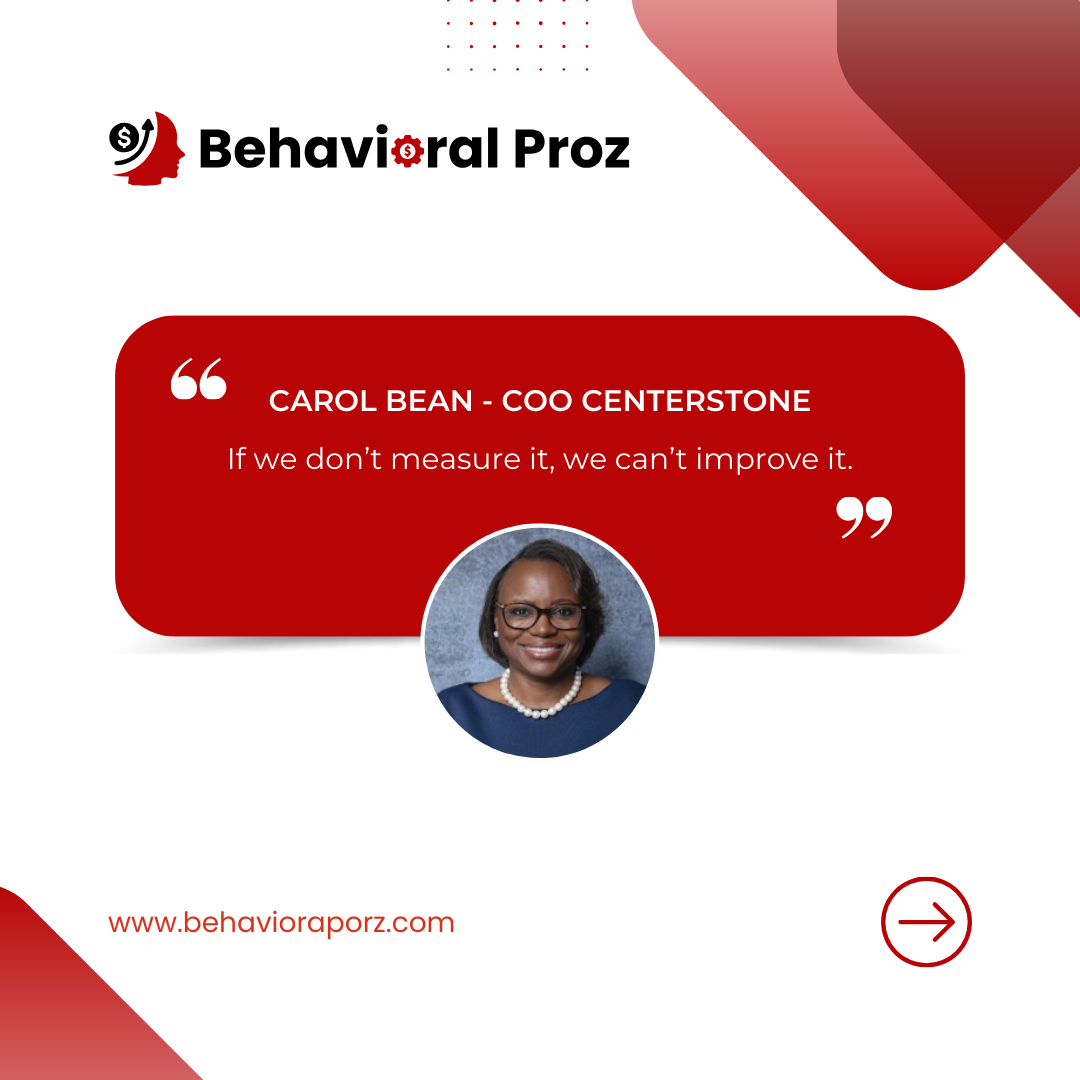
“If we don’t measure it, we can’t improve it. Our goal is to set a new standard in Behavioral Health Metrics that will benefit both providers and patients alike.”