

Behavioral healthcare providers face unique challenges in managing their revenue cycles. Complexities like handling patient insurance eligibility, streamlining appointment scheduling, managing vast volumes of documentation, and addressing repetitive administrative tasks can strain resources and impact operational efficiency. AI in revenue cycle management is stepping in as a transformative force, streamlining these critical areas and enabling organizations to focus more on patient care. Revenue cycle management in behavioral health is evolving rapidly with these advancements.
In this blog, we will explore how AI powered tools such as patient insurance eligibility verification systems, scheduling AI, and document AI are revolutionizing Behavioral Health RCM and transforming revenue cycle management in behavioral healthcare.

How Patient Insurance Eligibility Accelerates Revenue Cycle Management Process with AI
AI driven patient insurance eligibility tools integrate with insurance databases to automatically fetch and verify coverage details without manual intervention. Advanced algorithms cross check coverage information for accuracy and consistency, while proactive alerts flag potential issues such as coverage lapses or incorrect patient details. These systems also include customizable rules to align with payer specific requirements, minimizing claim rejections and ensuring smooth processing.
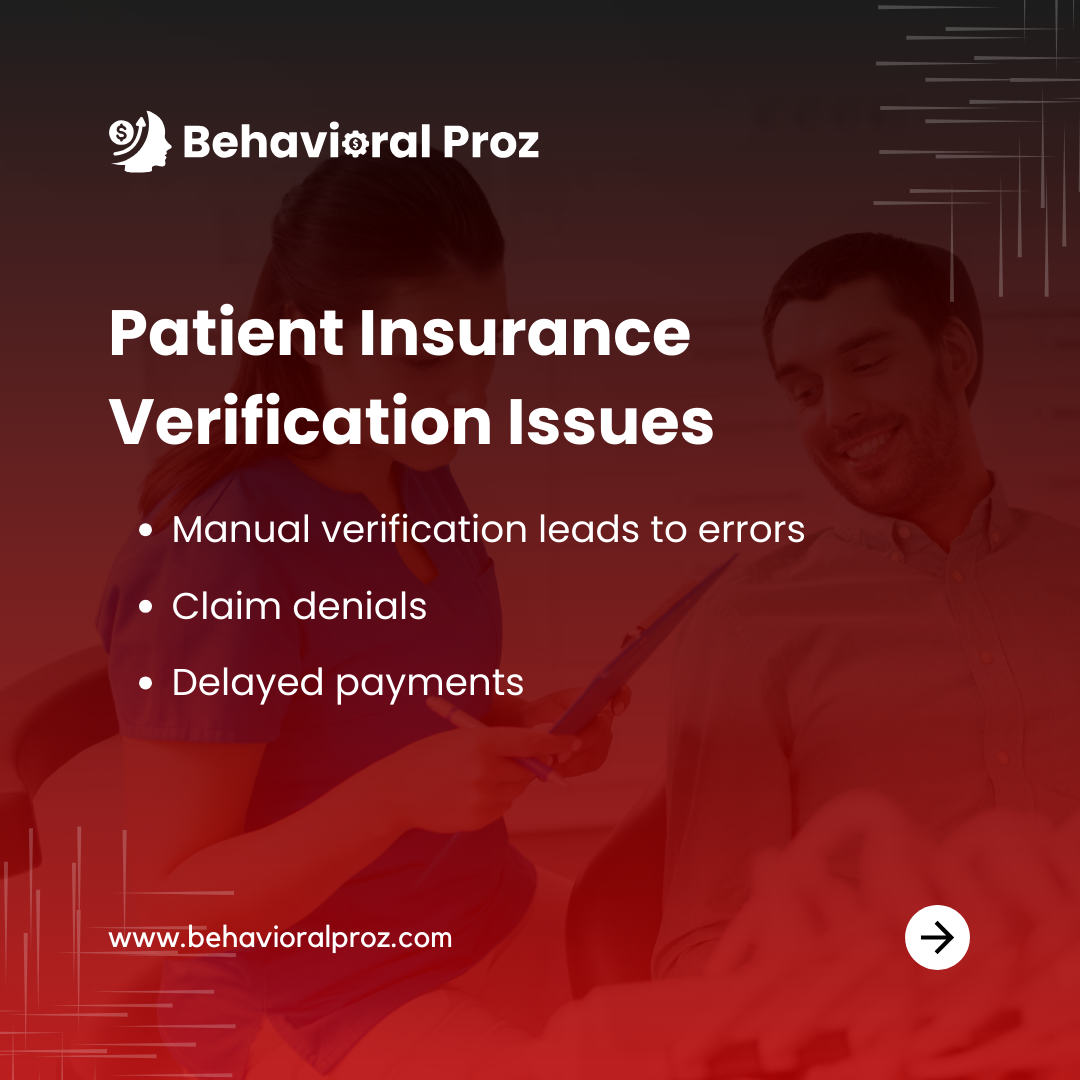
The Challenge: Verifying patient insurance eligibility manually is a time consuming and error prone process. Errors in this stage can result in claim denials, delayed payments, and patient dissatisfaction.
How AI Helps: AI driven patient insurance eligibility tools automate the verification process by accessing real time data from insurance providers and identifying discrepancies proactively. Here are the key benefits:
- Real time Verification: AI tools integrate with insurance databases to confirm coverage details instantly.
- Reduction in Errors: By eliminating manual data entry, AI minimizes errors that often lead to claim rejections.
- Improved Patient Experience: Accurate and timely verification reduces billing disputes and enhances trust.
Scheduling AI: Optimizing Appointment Management
Scheduling AI systems leverage predictive analytics to identify high risk no show appointments based on historical data and patient behavior. They offer smart booking capabilities that suggest optimal slots based on clinician availability and patient preferences. Automated reminders, sent through SMS or email, reduce the likelihood of missed appointments, while dynamic rescheduling features allow quick adjustments to fill last minute cancellations seamlessly. These features work together to enhance both operational efficiency and patient engagement in behavioral health RCM.
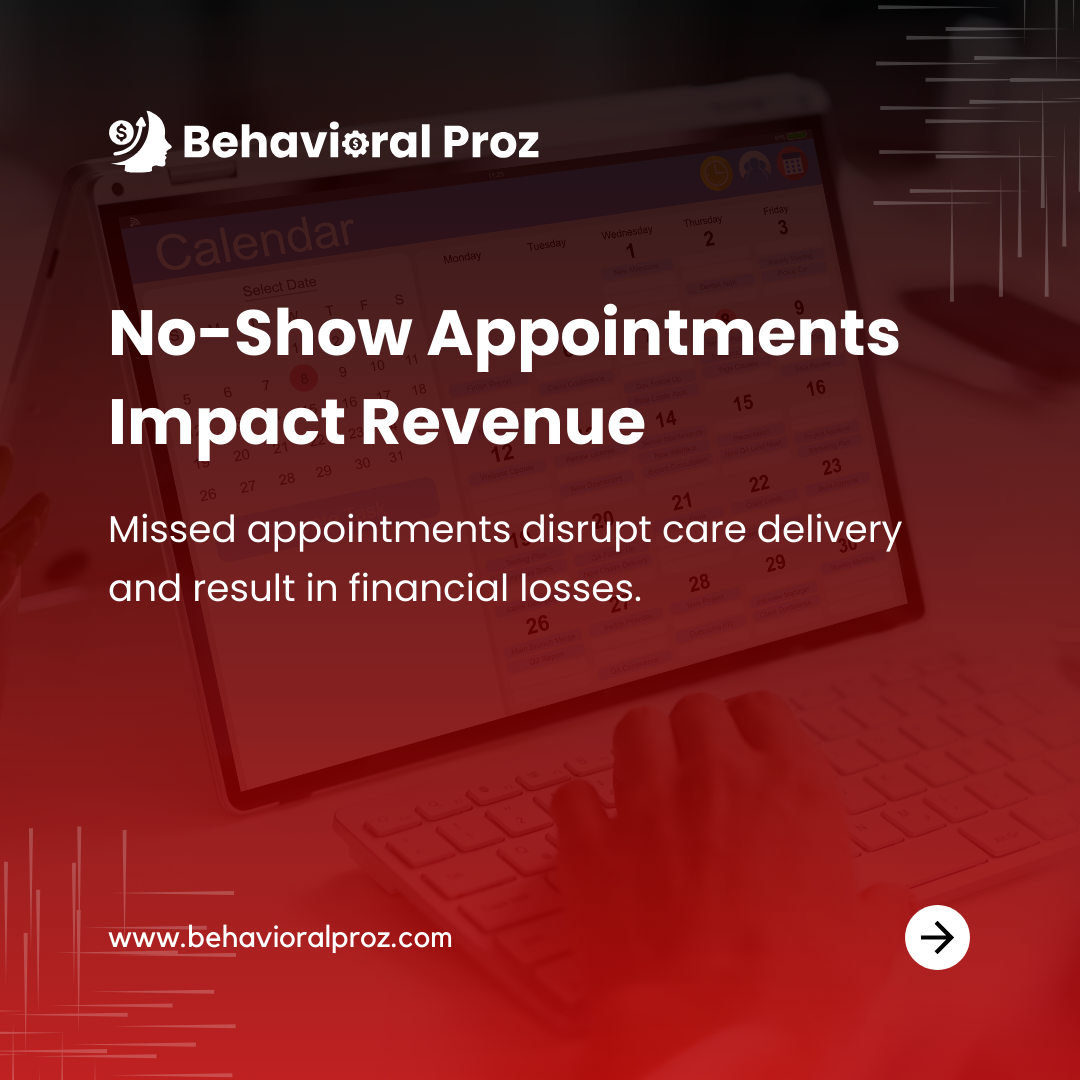
The Challenge: Behavioral healthcare organizations often struggle with appointment no shows, overbookings, and inefficient scheduling practices. These issues lead to lost revenue and disrupt care delivery.
How AI Helps: Scheduling AI automates and optimizes appointment management by analyzing historical data and patient preferences. Here are the standout benefits:
- No show Reduction: Predictive algorithms identify patients likely to miss appointments and send reminders automatically.
- Efficient Resource Allocation: AI maximizes clinician’s time by scheduling back to back appointments without overlaps.
- Enhanced Patient Engagement: Personalized reminders and seamless rescheduling options improve patient satisfaction.
AI enabled scheduling systems have been shown to reduce no shows by up to 40%, according to research by Deloitte, translating into substantial cost savings for healthcare providers. Additionally, according to Zappix, practices that use automated reminders report up to a 40% decrease in missed appointments.
Document AI: Simplifying Administrative Burdens
Document AI tools use advanced Optical Character Recognition (OCR) technology to digitize and extract data from physical and digital documents. These systems categorize documents based on their type such as claims, invoices, or patient records and validate compliance by identifying missing or inconsistent information. Seamless integration with Electronic Health Records (EHR) and other systems ensures workflows remain efficient and cohesive, enabling organizations to reduce administrative overheads significantly.
The Challenge: Behavioral healthcare involves managing vast amounts of paperwork, including patient records, billing details, and compliance documentation. Manual handling of these documents increases the risk of errors and non compliance.
How AI Helps: Document AI automates the extraction, classification, and processing of information from unstructured data. Key benefits include:
- Efficient Document Processing: AI reads and organizes data from scanned documents, emails, and electronic files.
- Error Minimization: Automated checks ensure data accuracy, reducing compliance risks.
- Time Savings: Staff can focus on patient care instead of administrative tasks.
A Real world Insight
Gartner reports that healthcare organizations adopting document AI have reduced administrative workloads by 50%, enabling teams to focus on higher value activities. Document AI plays a pivotal role in revenue cycle management by improving efficiency and reducing costs.
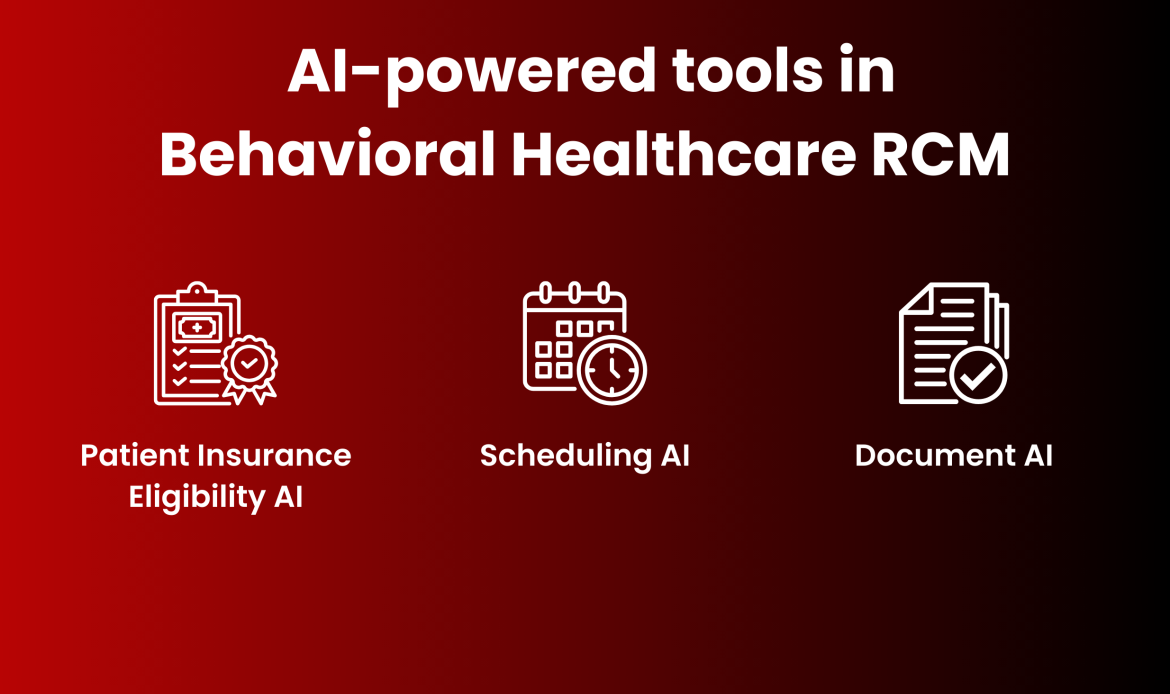
Integrating AI: A Strategic Imperative for Behavioral Healthcare
The integration of AI technologies from eligibility verification to RPA is no longer a luxury but a necessity for behavioral healthcare providers aiming to optimize their revenue cycles. By automating repetitive tasks, AI reduces administrative costs and improves profitability. AI provides actionable insights that help organizations make informed decisions and enhance patient centric care by freeing up resources, and allowing providers to focus on delivering better healthcare services. The behavioral healthcare landscape is rapidly evolving, and AI technologies are paving the way for more efficient and patient focused revenue cycle management.
A Forward Looking Vision
The behavioral healthcare landscape is rapidly evolving, and AI technologies are paving the way for more efficient and patient focused revenue cycle management.
The Role of Revenue Cycle Management Consultants
While AI tools are transformative, implementing and optimizing them requires expertise and strategic planning. Revenue cycle management consultants play a critical role in this process.
Revenue cycle management consultants assist organizations in selecting the right AI solutions tailored to their specific needs, optimizing processes to ensure seamless integration of these tools. They also provide training to staff, equipping them to maximize the use of AI systems, and continuously monitor performance through regular audits and adjustments to maintain efficiency improvements. Their expertise is invaluable in using AI in revenue cycle management.
Why Behavioral Proz?
Behavioral Proz, a leading revenue cycle management consultancy, specializes in helping behavioral healthcare providers harness the power of AI. With deep industry expertise, they offer tailored solutions that maximize ROI and streamline operations. By partnering with Behavioral Proz, organizations can confidently navigate the complexities of AI integration while focusing on what matters most patient care.
Conclusion
AI is revolutionizing behavioral healthcare revenue cycle management by automating processes, improving accuracy, and enhancing patient experiences. From insurance eligibility verification to RPA, these tools are driving efficiency and enabling providers to thrive in a competitive landscape.
Partnering with revenue cycle management consultants, like Behavioral Proz, ensures that healthcare organizations can fully leverage AI’s potential, transforming challenges into opportunities for growth and excellence. Embrace AI today and take a step toward a more efficient and patient focused future.