

In 2026, behavioral health organizations are facing an increasingly complex healthcare landscape. With evolving regulations, rising patient demands, and growing financial pressures, having the right behavioral health revenue cycle management (RCM) partner is crucial to success. Partnering with a specialized RCM provider ensures streamlined operations, improved cash flow, and better patient experiences.
The Growing Importance of Behavioral Health Revenue Cycle Management
Behavioral health organizations deal with unique challenges compared to other healthcare providers, including:
- Complicated insurance verification processes
- Lengthy reimbursement cycles
- Higher denial rates due to complex coding requirements
- Increasing regulatory compliance demands
A dedicated behavioral health RCM partner understands these intricacies and provides tailored solutions to overcome them
Key Reasons to Partner with a Behavioral Health RCM Company in 2026
1. Expertise in Behavioral Health-Specific Billing and Coding
Billing for behavioral health services requires a deep understanding of specific codes, modifiers, and payer requirements. Inaccurate coding can lead to claim denials and revenue losses. A specialized behavioral health RCM company ensures accurate and compliant billing practices, reducing claim rejections and maximizing reimbursements.
2. Improved Revenue Cycle Efficiency
An experienced RCM partner streamlines the entire revenue cycle, from patient registration to final reimbursement. Key benefits include:
- Faster claims processing and reduced billing errors
- Proactive denial management and appeals
- Enhanced cash flow through optimized revenue collection processes
3. Compliance with Evolving Regulations
Healthcare regulations are constantly changing, and staying compliant can be challenging. A reputable behavioral health RCM partner stays up to date with regulatory changes, including HIPAA, Medicare, and Medicaid requirements, ensuring your organization avoids costly penalties.
4. Technology Integration for Enhanced Efficiency
Modern behavioral health RCM companies leverage advanced technologies such as:
- AI-powered billing automation
- Electronic Health Records (EHR) integration
- Predictive analytics for financial forecasting
- Secure patient portals for improved engagement
These technological advancements not only improve operational efficiency but also provide valuable insights to enhance decision-making.
5. Enhanced Patient Experience
Financial challenges can impact patient care. With a strong behavioral health RCM partner, your organization can offer:
- Transparent billing processes
- Flexible payment options
- Faster resolution of billing inquiries
A positive patient experience builds trust and improves retention rates.
6. Cost Savings and Increased Profitability
Outsourcing RCM services to a specialized partner helps reduce administrative costs and allows your in-house staff to focus on patient care. This leads to:
- Lower overhead expenses
- Increased revenue through optimized collections
- Better resource allocation for core services
7. Scalability to Support Growth
As behavioral health organizations expand, so do their administrative burdens. A reliable behavioral health RCM company offers scalable solutions to accommodate growth, whether through increasing patient volume or expanding service offerings.

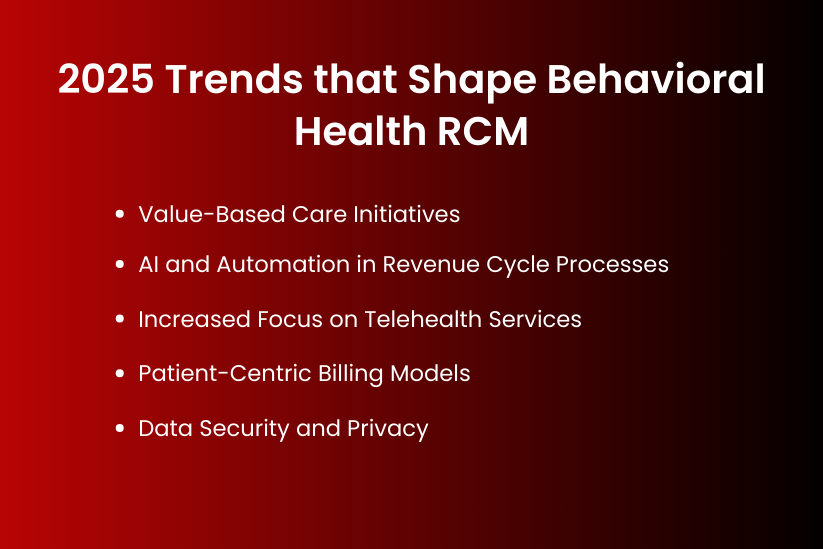
Trends Shaping Behavioral Health Revenue Cycle Management in 2026
To stay competitive in 2026, behavioral health providers should consider the following trends when selecting an RCM partner:
1. Value-Based Care Initiatives
With the industry shifting from fee-for-service to value-based care, RCM partners must align their strategies to focus on quality outcomes and cost-effectiveness.
2. Increased Focus on Telehealth Services
Telehealth continues to grow, and RCM partners should have the capability to manage virtual visit billing and compliance.
3. AI and Automation in Revenue Cycle Processes
Leveraging AI-powered tools to enhance claims processing, denial management, and predictive analytics is crucial for maximizing revenue.
4. Patient-Centric Billing Models
With rising healthcare costs, patients expect clear, transparent billing and payment options. RCM partners must adopt patient-friendly financial policies.
5. Data Security and Privacy
Given the sensitivity of behavioral health data, a top priority for RCM companies in 2026 is ensuring robust cybersecurity measures to protect patient information.





How to Choose the Right Behavioral Health RCM Partner
Selecting the right partner is critical for long-term success. Consider the following factors:
- Industry Experience: Choose a provider with proven experience in behavioral health revenue cycle management.
- Technology Capabilities: Ensure they offer modern solutions that integrate seamlessly with your existing systems.
- Compliance Knowledge: Verify their expertise in regulatory compliance specific to behavioral health.
- Performance Metrics: Evaluate their success rates in reducing denials and improving revenue collection.
- Client Testimonials: Look for positive reviews and case studies from similar organizations.
Conclusion
The need for a specialized behavioral health RCM partner in 2026 cannot be overstated. With the complexities of behavioral health billing and the evolving healthcare landscape, partnering with an expert ensures compliance, improved revenue, and enhanced patient care. By choosing the right behavioral health RCM company, providers can focus on their core mission: delivering quality behavioral healthcare.
If your organization is seeking a reliable RCM partner, now is the time to evaluate your options and invest in a partnership that drives growth and financial stability.