

What Medicare Beneficiaries Pay for Behavioral Care: 10 Numbers to Note
Introduction
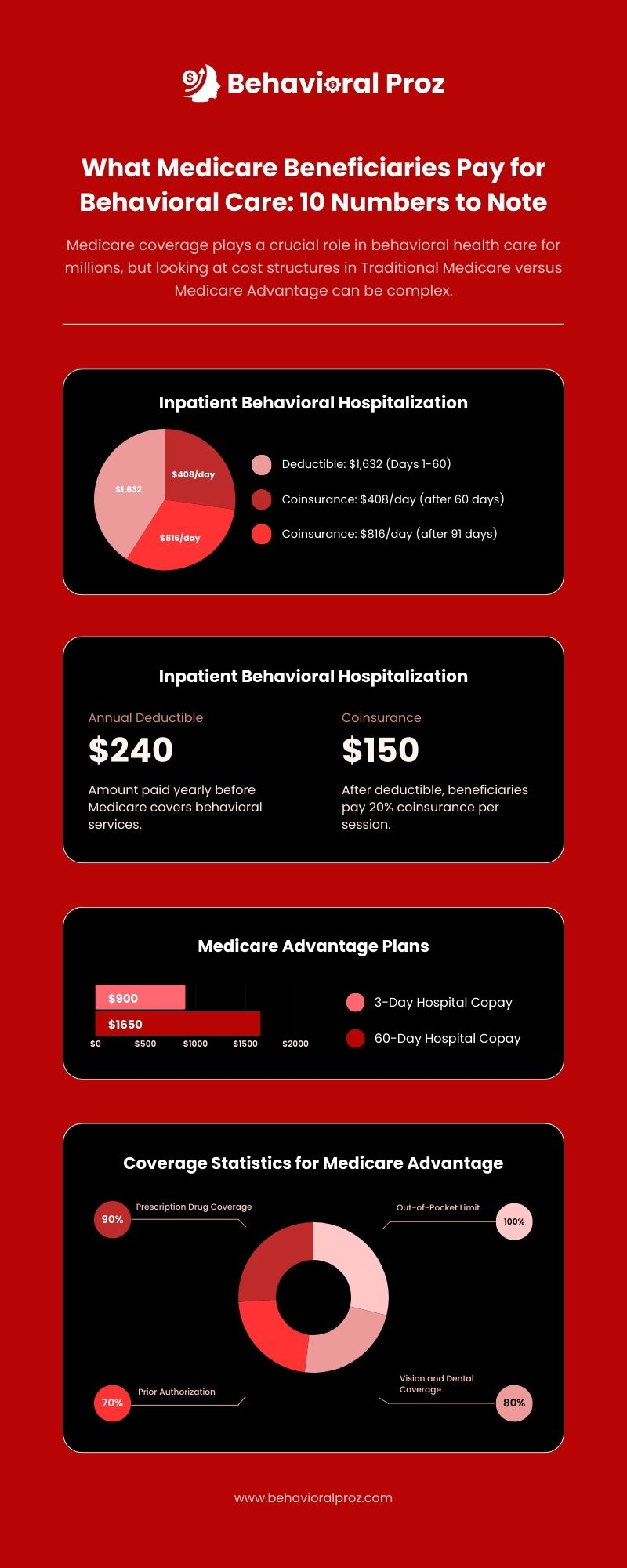
Medicare coverage plays a crucial role in behavioral health care for millions, but looking at cost structures in Traditional Medicare versus Medicare Advantage can be complex. Each plan type has distinct costs for inpatient and outpatient behavioral services. Traditional Medicare typically includes standardized deductibles and coinsurance, while Medicare Advantage may offer added services or more flexible terms. For beneficiaries, these distinctions make a significant difference in accessibility and affordability, especially when ongoing behavioral health support is needed.
Conclusion
With
BehavioralProz, behavioral health professionals can focus on their patient wellness, not just costs. Our eligibility verification AI provides clear benefit information and actionable support to reduce and educate patients and remove their financial stress, helping individuals choose coverage options and resources. Understanding these cost structures helps beneficiaries make informed decisions for managing behavioral health. Medicare Advantage plans often provide tailored, additional support like extended smoking cessation sessions or residential care. With Traditional Medicare’s stable coverage or the flexible options of Medicare Advantage, beneficiaries can better align their health needs and financial capacity, ensuring they can prioritize mental well-being and access necessary treatments.